You’ve probably heard that you need a website and that it’s non-negotiable if you want to succeed.
But you’re a writer, not a website designer. Why should this matter to you?
With social media like Instagram, Twitter, and TikTok (plus other online platforms like Substack) being easy to work with, all you need to do is post consistently, and presto, you should have a following to promote your book to.
It’s way better than managing a techy project like a website and dealing with the maintenance. Or that’s at least what you tell yourself.
Because why waste your time when you:
- Don’t think there’ll be much of a connection between increasing book sales and your website.
- Don’t have the time to build the website and would rather be writing your book.
- Are just starting out and don’t have the means to invest in something like this.
However, an author website has some significant advantages over every other platform. Advantages that help you in the long run.
A well-built website can:
- Showcase your voice and brand in a way that isn’t limited by platform restrictions like word count and image sizes.
- Promote your books without distractions from other content.
- Announce events and book releases consistently, without worrying that your readers may never see it if the algorithm doesn’t choose to show it.
- Help you garner a community that you don’t need to worry about being taken away because your account is banned.
- Make you look professional in the eyes of agents, publishers, and readers.
In a nutshell, yes, we recommend all serious authors get a website. But that begs a few more important questions, like what is the purpose, when should you get one, and what goes into one?
Because getting a website is not simple. Unless you’ve been at it for a while like us.
Just so you have an expert’s take, we’re going to answer those questions and arm you with the information you need to make the best decision for your author career.
What is The Purpose of an Author Website?
You’ve probably heard it all before: your website is an online presence used to build your brand, sell your books, and connect with your readers. But that’s not all it is.
An author website is your digital legacy. It’s a timeless record of your authorship, unlike social media posts that disappear and won’t be talked about after a week (if your readers even see it).
Your website’s purpose is to control your narrative by taking the top spot on Google when a reader searches for your name. Once they search for you, it’s your website’s job to tell them everything they want and need to know about your work and brand.
To be honest, the true purpose of an author website depends on you, the author.
The goals you have right now will dictate what your website is used for. Here are some examples:
- Display books better than Amazon: Provide your readers with a page to find all your books and links to their preferred retailers to make exploring your catalogue easy.
- Monetize your blog: If you blog as much as you write books, you can use ads, affiliate links, and memberships to make a living from your blog, on a platform you control.
- Showcase your expertise: Establish yourself in your industry by displaying your publications, research, projects, speaking engagements, etc. Positioning yourself this way can help you secure book deals.
- Set your debut novel up for success: Give journalists and other professionals vital details about your book and yourself to boost your exposure.
- Offer services and premium content: Have a central area for your audience to learn and inquire about your services, as well as premium content they can’t find anywhere else.
- Centralize your marketing and publicity: House your book announcements, giveaways, contests, and other marketing efforts in one place to build hype around your releases.
- Build an email list: Grow your community by enticing readers to join your list with a sign-up page on your website and keep them engaged and tuned in to your world.
Goals = Purpose. You can tailor your website to fit any one (or a few) of these goals, to support your author career.
How does AI impact your website?
We’ll admit that the introduction of AI has made Google look a bit different, and it makes authors unsure of their next move. Is a website still worth it?
Yes, because the idea is the same for your website – with or without AI.
AI’s not getting information about you from thin air. ChatGPT and Google’s AI Overview pull information from existing sites, including ones that may be sprouting their opinions about you and your work.
You can use your website to ensure the information AI pulls is accurate and reflects your brand.
Do I Really Need an Author Website?
If you want to be a professional author, yes, you need a website. It forces you to consider your brand and books from a business perspective, and it takes out all of the guesswork for influencers, publishers, and agents who are interested in your work.
Just by visiting your site, they’ll know exactly where your books fit in the market.
But do all authors need a website?
It’s true, not all authors need websites. A website is only essential if you’re a debut author looking to kick off your career, or a seasoned author looking to improve your online presence.
You don’t need a website if you just want to express your creative side, or if you view this as a hobby you’re not willing to put much effort into.
And what about cases where authors are thriving on social media? You already have your ‘platform’ where readers can find you, what more do you need, really?
We can’t stress this enough: even if you’ve built a substantial following on social media, you need a website.
With social media, your account could get banned, you may lose favor with the algorithm, your readers may leave the platform, or the platform could get shut down altogether.
It’s risky putting all your eggs in one basket, especially when it’s not even your basket.
If you already have the following, we can understand your reluctance to get a website. Why bother with the extra effort?
Here’s a better question: Why not capitalize on what you have and secure it for the future? A website is an investment, so it may be time to invest in yourself.
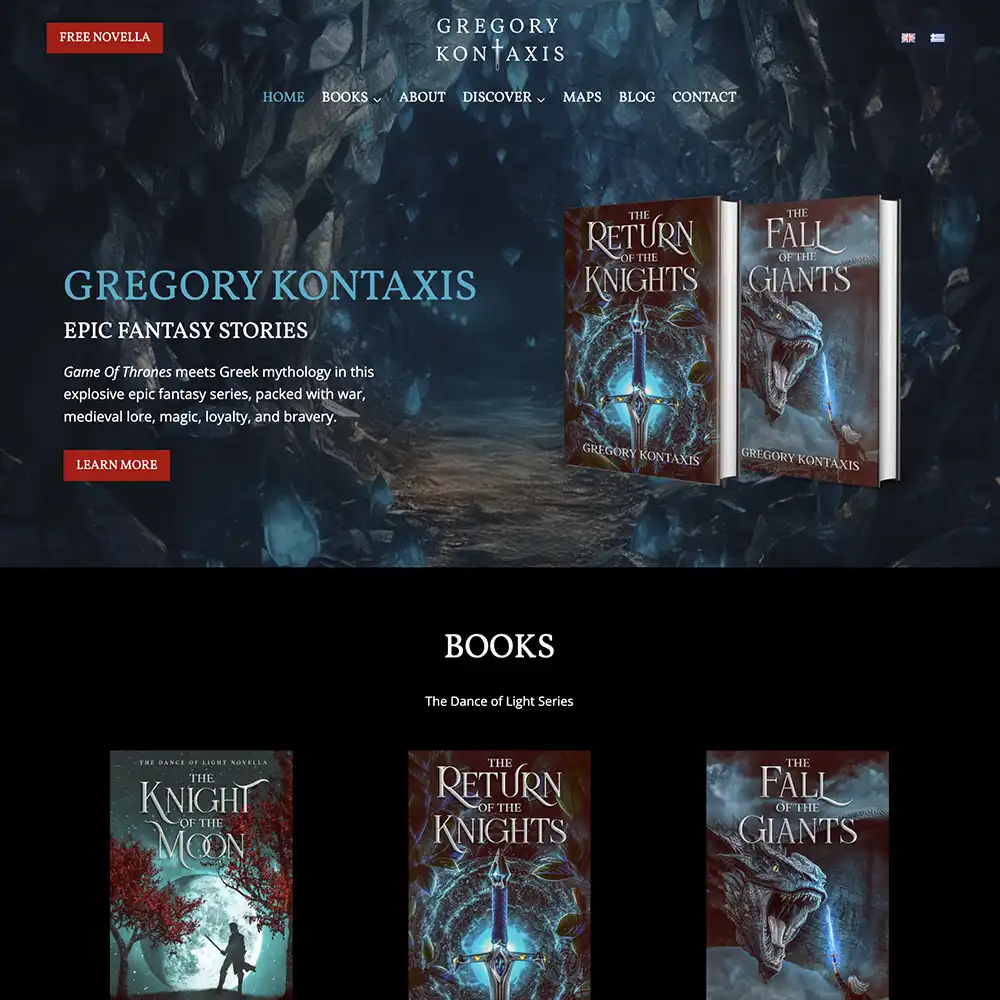
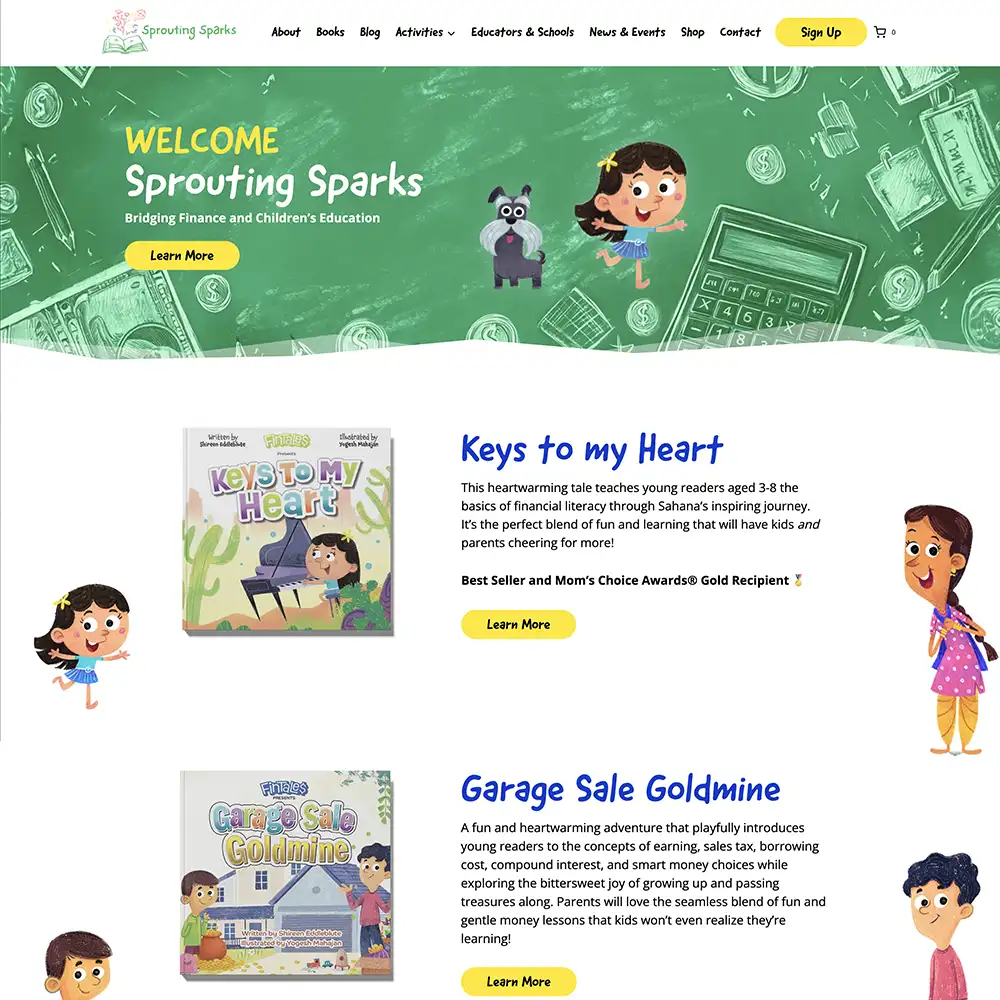
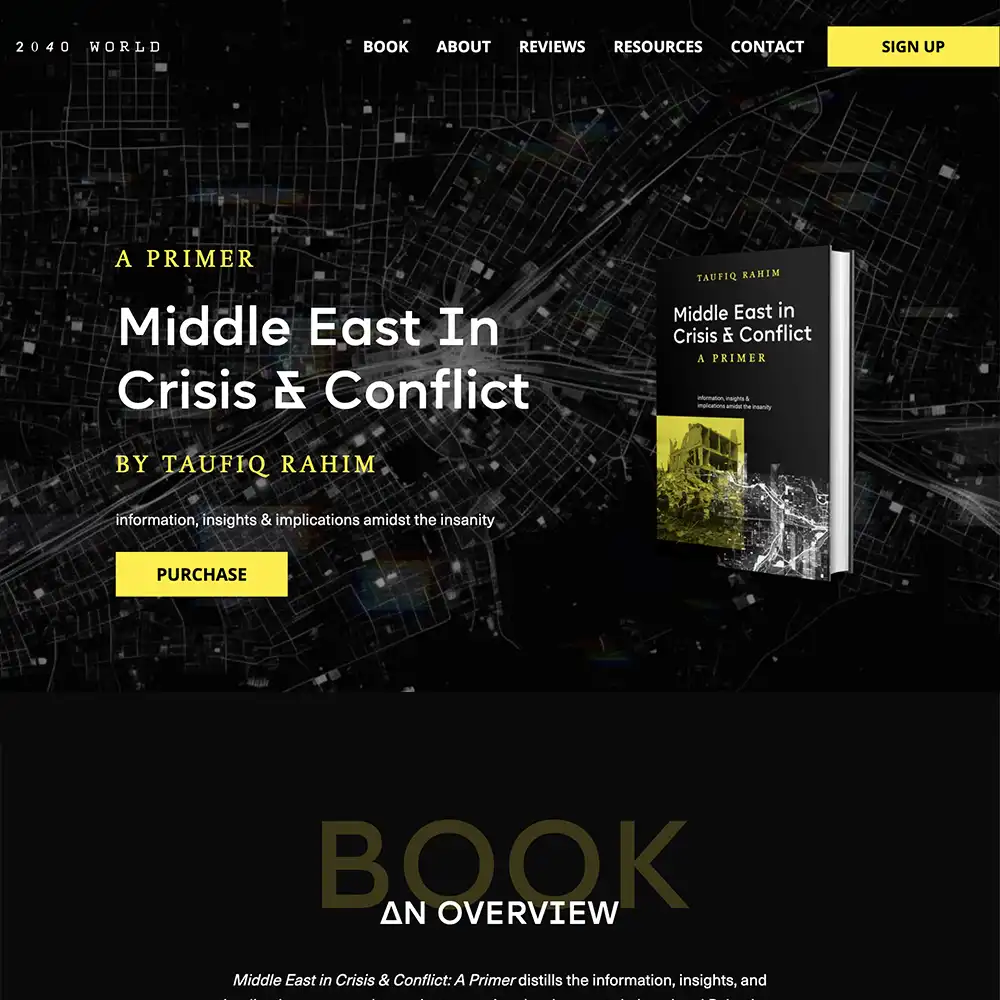
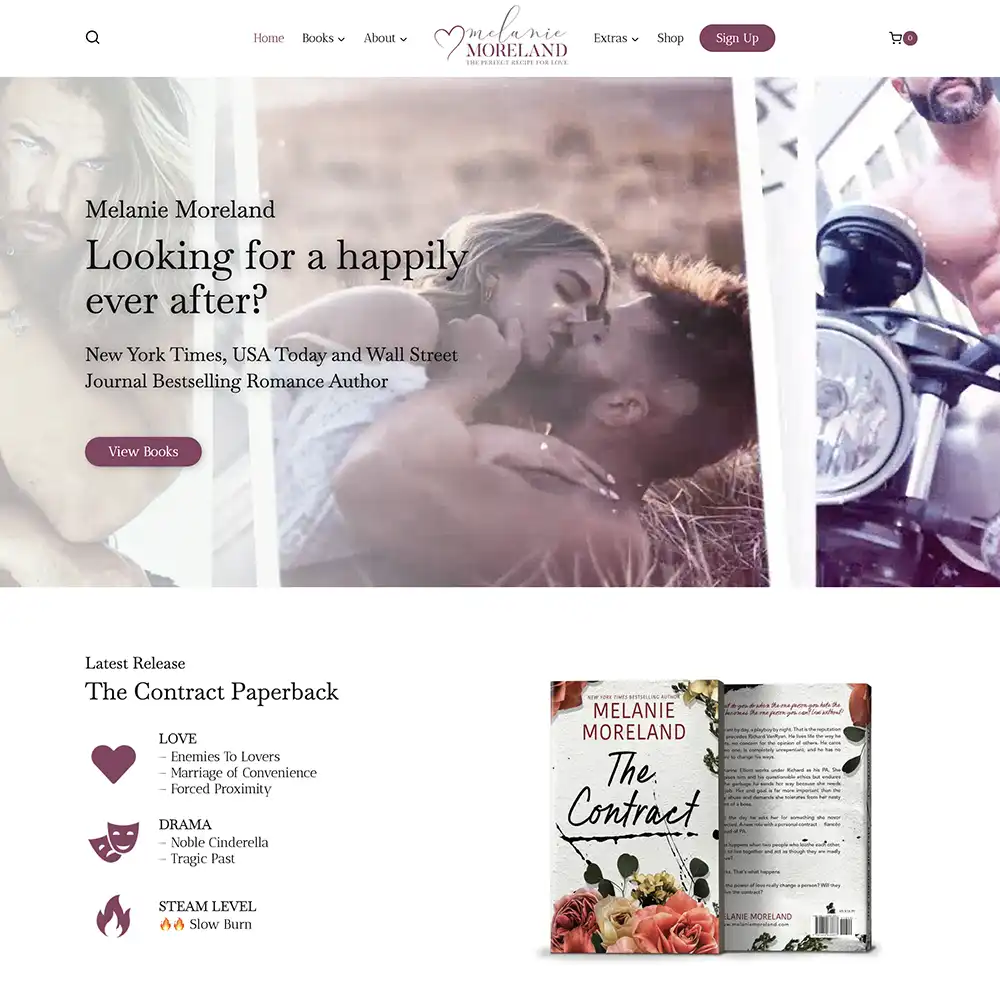
When to Make an Author Website?
We’ve met with 100s of authors from different genres and at different points in their careers, and we know this for sure: everyone has a different path, and therefore can be biased when answering this type of question.
Every author’s experience is different.
Some authors claim they didn’t need a website until well into their careers. But they had a lot of luck getting to that point. They’re biased by their experience. We all are!
So, when people ask us ‘When should I make an author website,’ it’s hard to give a plain, simple answer (especially since we build websites for a living!). But if we had to…
The sooner you get one, the better!
Getting a website as soon as possible will benefit your career. It’s a drastic step that requires a lot of investment, and if you’re ready to take that next step, you’re ready for a website.
Because being struck by publishing luck isn’t up to you.
This is such a difficult career path to find success in, and taking professional measures to ensure your longevity can be super helpful for the big picture.
Self-published authors rarely make it without a website (we don’t personally know any that have), and traditionally published authors are eventually asked to get one, or will have one made for them, after securing a deal.
If you’re self-publishing, your hopes and dreams ride on your ability to market and sell. And for a traditional publisher, your book sales are how they make money.
It’s the natural ‘official’ step. Because once you’re ready to market your book, you need all the tools you can get.
BookTok trends, genre fads, and moments in the sun will always come to an end, but if you use your own controllable element in conjunction with luck, you’ll set yourself up in the long run for a more consistent career.
We may be biased ourselves in saying all of this, but we truly love authors and all the ways they impact the world. Of course, we want you to do well and reach as many of your readers as possible.
Though there are some cases where we think it’s probably not necessary for you to get a website just yet:
- Pre-debut: If you’re still working on your first manuscript, or you’re more than 6 months away from releasing your book. (You should have a website at least 4 months before release, so you can build hype. Book launches need hype!)
- Finding an agent: If you’re still looking for an agent for your book, getting a website probably shouldn’t be a top priority – unless you already have a platform. (If you’re a non-fiction author, having a platform is essential to showcasing that you already have an audience who’s interested in your work.)
What to Put on an Author Website? (With Examples)
Once you’ve figured out whether it’s time to get an author website, you have to decide what you want on your website. It can be daunting given the technical expertise needed to build one, but luckily for you, that’s exactly what we have!
We’ve built 100+ high-performing author websites that do more than just look good—they help authors sell more books, grow their email lists, and build thriving fanbases.
Saying we have expertise and experience is an understatement.
In our professional opinion, these are the must-have sections to put on your author website:
- A gripping intro
- Information about your book
- Your branding
- A sign-up page
- A blog section
- Extra content
- Other works and services
- Contact details
Remember: Whatever you decide to put on your website, your website needs to:
- Appeal to your target audience: Focus on genre and your branding.
- Load quickly: Avoid bad hosting, a cluster of plugins, and large file sizes.
- Be mobile-friendly: Ensure all features translate well on mobile, as most users will browse on their phones.
- Grow your readers: Use engaging content to build a community.
A poorly built site can sometimes be worse than no site at all. Have the above in the back of your mind at every step to make the most of your website.
A gripping intro
This is the first thing a reader will see when they click on your website. You have to make this moment count.
Whatever your goal is for your website, it should be clear as day here. For example, if you want to sell your debut series, make sure the intro showcases your debut book, the series name, and an exciting short blurb about it.
Don’t forget to make your intro consistent with your overall branding. This gives your website personality and helps you stand out in the readers’ minds.
Here’s an example of a Fantasy intro that we did for L.S. Westhoff.

The intro:
- fits the book cover,
- highlights the book,
- has a great description of the type of writing Westhoff has in her books,
- and even includes awards and achievements to build her reputation.
All before the reader begins to scroll!
Information about your book
Whether it’s in your intro or below it, you need to highlight your book. That’s the whole reason why you have a website!
The information you have will also have a home on a page dedicated to all of your books.
Here’s what you need to draw the reader’s eye to your book:
- Blurbs: A short blurb and a longer description of your book for your homepage, as well as your book pages.
- Book covers: Get clear images of your book covers for thumbnails on your book page, and larger sizes for your homepage.
- Links to retailers: Make it easy for readers to buy your book from their preferred retailer by placing links to all the places your book’s available (or lead them to your shop if you want an e-commerce site).
- Reviews: Gather your best reviews and put them in a carousel on your homepage and book pages.
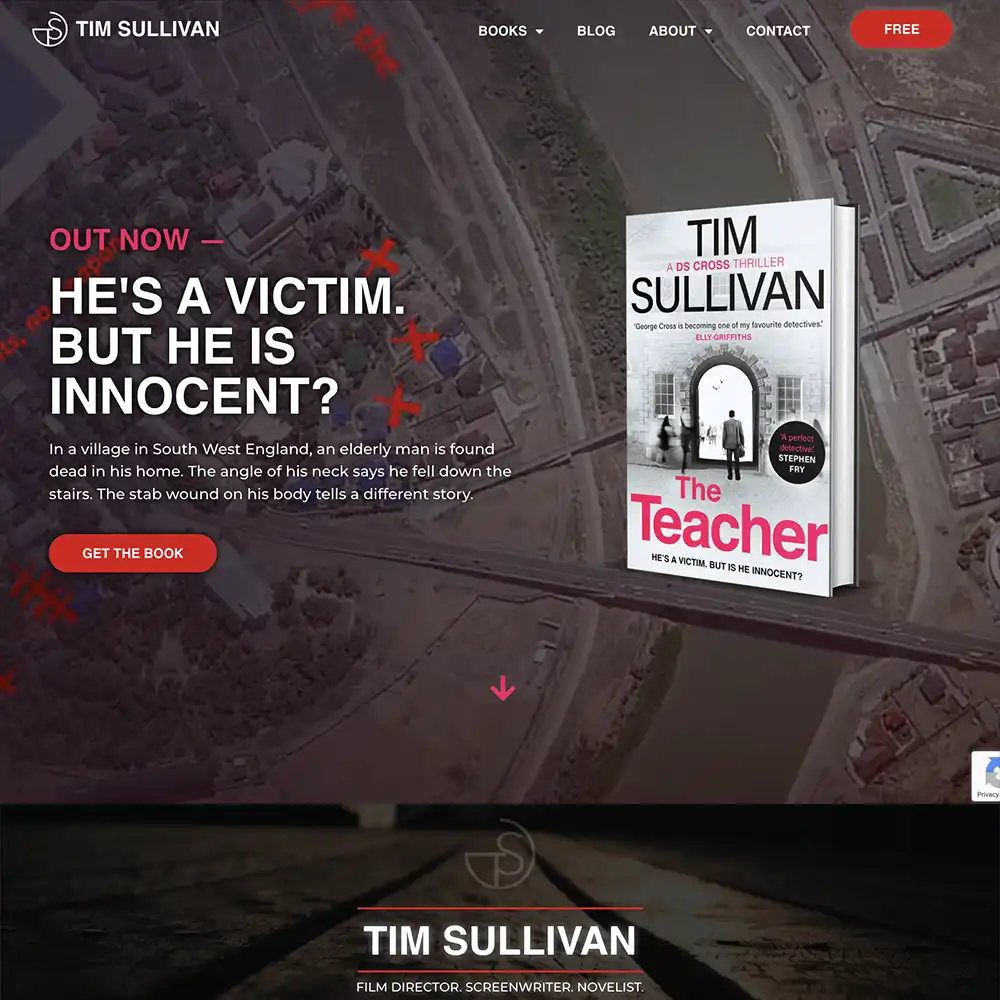
Check out this Thriller website Book Page we built for Tim Sullivan, for example:

This page, although focused on the book, maintains the site’s eerie atmosphere while giving all the elements a chance to shine. This book page has it all: a clear thumbnail of the cover, an exhilarating blurb, links to multiple retailers, and raving reviews.
Your branding
Your brand is the first thing a reader thinks of when you come to mind. Use your website design and copy to echo your brand and enhance the message you want to get across.
If you’re still trying to figure that out, start with your bio. Readers don’t know who you are as yet, and it’s your job to tell them!
Although it may be intimidating to write one, a good bio builds familiarity and trust with the reader while promoting your work; it cannot be skipped.
Your bio should include everything a reader would need to know about you: your journey, personality, credentials, and previous works.
Based on the branding you’re going for, you then need to get a professional headshot for your site that suits the vibe.
Here’s an example of all these elements together on an About Page we built for speaker Joe Hirsch:

This page is charisma and authority-building wrapped in a neat package. The copy is Joe, through and through – conversational and bold.
When you’re done reading the bio, your eyes are drawn to links encouraging you to take action. And if you’re not ready, you can keep scrolling and see more credentials that boost his brand.
A sign-up page
With a website, you can increase the number of readers who will see your work. If you want to build a community from those readers, you need a sign-up page that gets them to join your email list.
Email marketing is one of the best ways to engage an audience in the long term. It’s consistent and controlled. You send good content directly to their inbox, and if they’re interested, you’ll have a warm audience to sell your books to.
You can add this as a bright button on your menu that says, ‘Sign Up,’ or ‘Free,’ so it stands out. This will link to the sign-up page, where you’ll have a lead magnet (or reader magnet) that offers something to the reader in exchange for their email address.
You can offer a free novella, the first 3 chapters of your best series, interactive resources, behind-the-scenes content, updates, etc.
This Sign-up Page we did for Kate Jones is a great example:

This page has 3 main focuses: the book on offer, a call to action that entices the reader to join the list, and the form to fill in details.
It should always be this simple!
Any more information or elements, and you’ll be crowding the page and distracting the reader. It’s important to make signing up as easy as possible.
You can even omit the ‘First name’ field and just have a field for the email address, to cut to the chase.
Note: If you’re a speaker or render services, you can swap this out for a ‘Book a Call’ page to get leads.
A blog section
You may think a blog will just take up time from you writing books, but this can help you target more of your readers.
Blogging is a way to engage interested readers and keep them coming back to your site, and it also grows your online presence.
If you post content that relates to your audience’s interests, it may show up when they Google that topic. For example, if you’re a fantasy author, you can write a blog on how you came up with your ‘Fantasy World Maps.’
Niche topics are not off limits either.
Simply writing about your experiences and thoughts will build your reputation and help readers relate to you.
Take this Blog Page we built for Tom Elliot’s website, for example:

Tom’s blog page continues the atmospheric tone of the site, and it mainly contains updates for his releases.
Of note is his Patreon blog, shown above, where he posts more frequently. You can tell from the snippets that he’s more candid and free with these posts, encouraging readers to join his community.
He uses this blog to engage his readers while also building a strong bond with them.
Extra content
This may be less essential than the others, but if you want to increase the time a reader stays on your site, having extra content is how you do it.
You can include media resources relating to your work, maps for your books, glossaries, character descriptions, family trees, etc.
Use this opportunity to give the fans what they want, while also introducing new readers to your world.
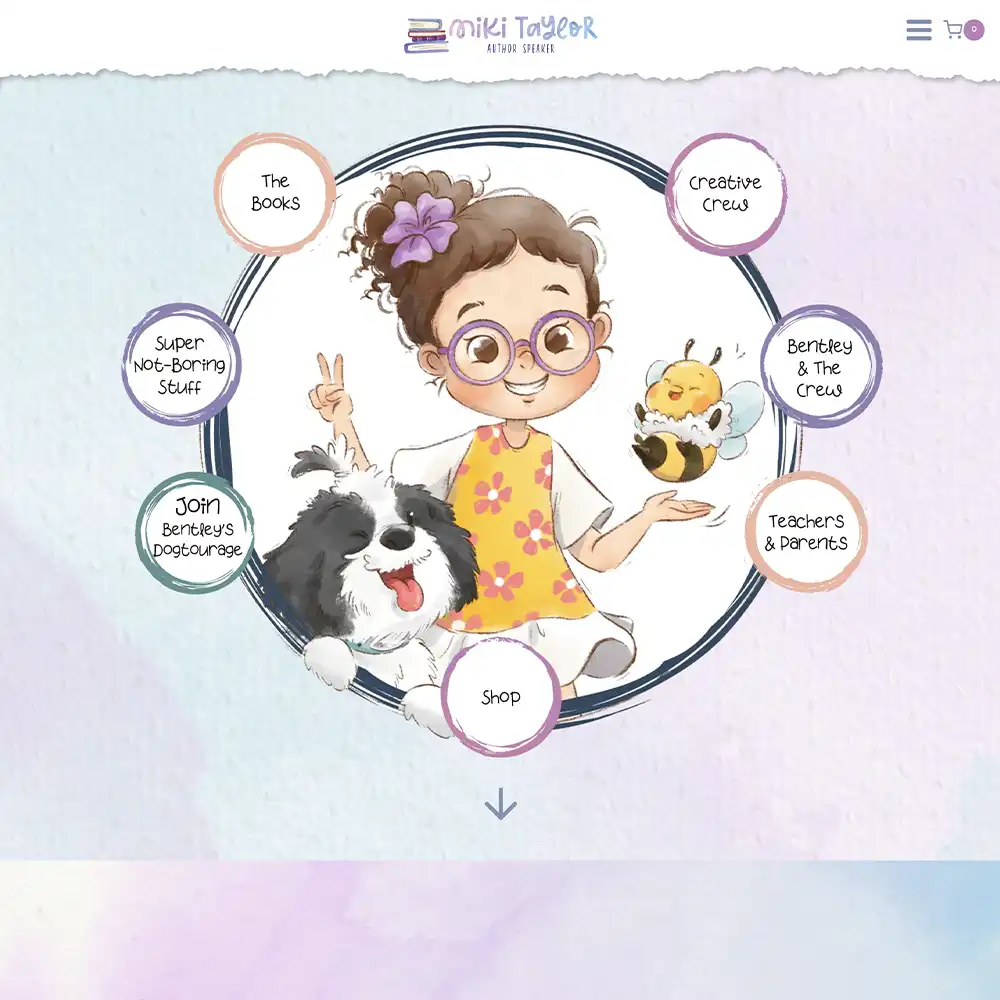
For example, check out this adorable Extras Page we built for Anna Kay:

The extras you pick should match your audience, and that’s exactly what Anna Kay did here!
Each page has interactive content that will excite kids and teach them a thing or two.
Other works and services
If you dip your toe into other content like Podcasting, YouTube Videos, coaching, etc., your website is the perfect place to show it.
When a reader is interested in your books, they most likely want to see what else you’re up to and possibly support you in it.
That’s why it’s important to display your brand and work on a website.
Or maybe your audience knows you from something else, and having a page dedicated to it will help you show up on Google for it easily – and from there they’ll discover your books!
Here’s an example of a Courses Page we designed for L.S. Lakin:

Lakin’s website strongly represents her branding because she does more than write books. That’s why her courses page is not just informational with credentials and details of her courses; it’s warm and friendly.
You feel inclined to trust her from the copy down to the cursive fonts. It’s important to dedicate your time evenly to all your pages, so each can stand on its own and entice your audience.
Contact details
A website gives you the chance to connect with others: readers and industry professionals alike!
Make sure to include the contact information for your agent or publicist so journalists and influencers can book you for media appearances or contact you for film rights (crossing fingers).
We also suggest a separate page for a contact form for readers and industry professionals to get in touch with you.
And for good measure, make sure you include your social media profiles and their links for interested readers to follow you. Always keep the engagement going!
Below is a great example of a comprehensive Contact Page that we designed for Chunka Mui:

This form follows the same ease as the email sign-up form, but with more fields and a couple of buttons to book Chunka Mui to be an advisor or to speak at an event.
The focus is smartly on those call-to-actions, but if you’re interested in engaging with him on other platforms, the social media links are conveniently placed below his headshot.
Is It Too Late To Publish Your Author Website?
It’s never too late. Even if you’re a month out from your release or you have multiple books published, you can get an author website. It’s better to have one late in your career than never have one at all.
Because there are 2 things that are completely within your control when it comes to your online presence: Your website and your email list.
With these tools, you have a point of contact with your readers that’s independent of social media and other platforms. No matter what changes around you with algorithms and the global climate, you have these to fall back on.
Again, we live and breathe author websites. That’s why we know that the really big question you need to ask yourself next is, what do you want from your website?
Once you’ve decided on the value you have and want to put out there, all you need is a secure, professional hub to house it.
Everything falls into place from there. Except for the part where you actually build the website.
You could find author website templates, or even try and build it for free (which we don’t recommend). But if you want an author website that represents you and your books perfectly, you need something tailored-made.
That’s where we come in.
We build custom, professional, high-quality author websites that readers fall in love with. You’ve seen what we can do from the examples above, but if you want to see more, here’s our portfolio.
Ready to take the next step towards a 24/7 online presence? Fill in this inquiry form and we’ll see how we can help you!