You’re brilliant at setting the tone, introducing the atmosphere, and guiding readers through narratives.
In book form.
Now you have to do all of that with an online presence? It’s overwhelming to say the least! Blending atmosphere with technical know-how is not for the faint of heart.
Your website must look good while being the perfect representation of your books and brand. It’s a mountain-sized task when you’re not even sure what your author website should look like.
Let’s change that! Our blog is going to walk you through everything you need to know when designing your website, from style to essential pages.
At Rocket Expansion, we’ve built over a hundred author websites for bestselling and debut authors alike. What you’ll read below comes straight from real-world experience designing sites that turn readers into fans.
What Is An Author Website?
An author website is your professional hub where you can display all your works, sell your books and services, establish and promote your brand, and connect with readers.
It’s not just a great marketing tool (that showcases all your books way better than Amazon does), it’s your digital legacy that allows you to be the first point of contact for any reader, publisher, agent, or journalist to discover more about you.
Some readers have claimed that they use Goodreads or Amazon to search an author’s catalogue of books, while many other readers prefer to browse the author’s website and dive into their blogs, join newsletters, and see right from the source what the recommended reading order is.
For those authors who also prefer Amazon, remember there are plenty of readers who want to see your professional online presence on a website.
Amazon could be enough for some, but do you really want to miss out on those readers who want to see all you have to offer?
Author websites are definitely a time and money investment that requires your patience (although getting one is way easier today than it was 10 years ago), but the benefits can provide you with long-term career sustenance.
An author website allows Google to identify you more easily and fill out that easy-to-understand block of information, instead of Google populating this information from other sources that don’t have the full story, or have a completely incorrect story!
And unlike social media, you can customize the user experience as you see fit with a funnel-oriented site with curated pages. For example, a home page that guides readers to what you prioritize (your debut, your most popular series, your newsletter, etc.).
Why Every Serious Author Needs One
A great author website isn’t optional; it’s the foundation of your professional presence. It shows readers, agents, and media outlets that you take your career seriously and gives you a permanent home that no algorithm can take away.
Do authors have their own websites?
Yes! Many authors have their own websites, from bestsellers to debut authors to unpublished authors gearing up for their release. They look different for each author because they all have different goals, genres, styles of writing, etc.
The reality of the industry is that there are so many authors with so many stories that have similar concepts, but wildly different in execution. There are only so many words in the dictionary, and we’ve all been rearranging them in different ways from the start of storytelling.
Nothing’s wholly original anymore, except you and your way of telling stories. That’s why these authors invest in websites. It’s a chance to tell their unique stories and promote to their target readers.
An author website also gives these authors control of metrics like traffic, clicks, and engagement that they wouldn’t otherwise have.
Readers aren’t your only audience either! An author website is a great place to send agents, journalists, and industry professionals if they want to see your work.
Imagine you’re at a book fair or conference trying to network, and you think it’s going well. You did your elevator pitch to an author who has connections, and suddenly they ask, “Where can I find out more about this and your work?”
You’ll want to have a professional, brand-forward place to send them.
What Should I Call My Author Website?
Your author website domain name should be as close to your branding as possible. It should be called your author name, whether it be a pen name or your actual name.
The best author website names are professional, easy to read, and connect to your genre.
Remember, some names fit certain genres more than others, and if you plan to write in other genres, consider how this will affect your strategy for different pen names.
Note: In the case of more than one pen name, we do suggest having another website for your other pen name if it takes off and becomes your main source of income.
All of this matters because your pen name and, therefore, website name will be the URL. AKA www.yourname.com. It’ll be in lowercase, can’t be too long, and needs to be available – yes, someone could have your name already!
Author Website Domain Checklist
- Matches your author or pen name
- Easy to spell and remember
- No hyphens or numbers
- Includes “author” or “books” only if the name isn’t available
- Domain privacy enabled
It’s a good idea to purchase your domain name when you know you’re going to need a website for your books.
If you have coin to spare (which will be between a few hundred to a thousand dollars) and believe it’s worth it for your brand, you could always approach the domain registrar to negotiate the purchase of the domain with your name. They’ll approach the owner and see if a sale is possible.
Otherwise, adding a middle name, author, or writer at the beginning or end of your name will work. For example, johnksmith.com, johnsmithwriter.com, authorjohnsmith.com.
However, if an author in your genre has a similar or the same name you want to use, it’s time to start thinking of another name. It’ll only confuse readers and hinder your establishment as an author.
Note on where to purchase your author website domain
If you’re going to use Wix or Squarespace, you can purchase it there, which will link your website and domain pretty quickly.
However, if you’re using WordPress to build your website, or you’re not building your website any time soon, you can purchase it from NameCheap. As in the name, it’s relatively cheap and has an easy process! Another good option is GoDaddy.
Top Tip #1: You’ll also need to buy hosting for your author website, but you don’t need to purchase it with your domain. Decide on hosting when you’re ready to build your author website.
We’ll leave you with a few author website domain tips
Here’s what we suggest for when you name your author website:
- Your name and brand need to match.
- Try not to use hyphens, as it’s not commonplace for authors, and it can come off as spammy.
- Use domain privacy to protect your details online.
- If you already have a website but are looking to build a new one or change your name, set up your redirects so there are no errors with any pages.
What Should Be On My Author Website?
Your author website should consist of content you’d want readers, agents, publishers, reviewers, and journalists to see.
Behind every detail on your website should be your driving goal for what you want this audience to see. From just browsing, they should get a taste of what you can do and who you are.
Take this opportunity to hook them with quality content that keeps them coming back for more.
All of this is easier said than done, so to start you off, we have some essential pages to put on your author website:
- Book details and links
- Information about yourself
- A place for others to contact you
- Reader magnet
- Extras
1. Book details and links
One of the biggest reasons any author would want a website is to increase book sales and grow their business, so obviously, you want to show off your books.
How you display your book matters to the user experience in these ways:
- Book Cover: Your cover needs to be clear as a thumbnail and small in size, so that it doesn’t cause loading issues that make readers impatient and leave. Remember to balance the colors of your book page and sections to help the cover pop and entice.
- Book blurbs & descriptions: This is the next selling point of your book, so make sure it matches each book’s atmosphere. Write the blurb with paragraph breaks, italics, and bold to highlight what you think will draw attention (for example, awards & accolades, tropes, etc.)
- Retailer links & formats: It should be easy as pie for a reader to buy your book from their preferred retailer, so include all the retailer links for each book, as well as other formats like audiobook, print, and eBook (if applicable).
- Reading orders & series info: Another way to make your books appeal to readers is by providing a comprehensive reading order for your books, as well as series details to help them pick what they’d fancy the most (and obviously put your bestselling book front and center if you have one).
T.A. White’s book page, which we built, is a great example of how to pull off these elements above:

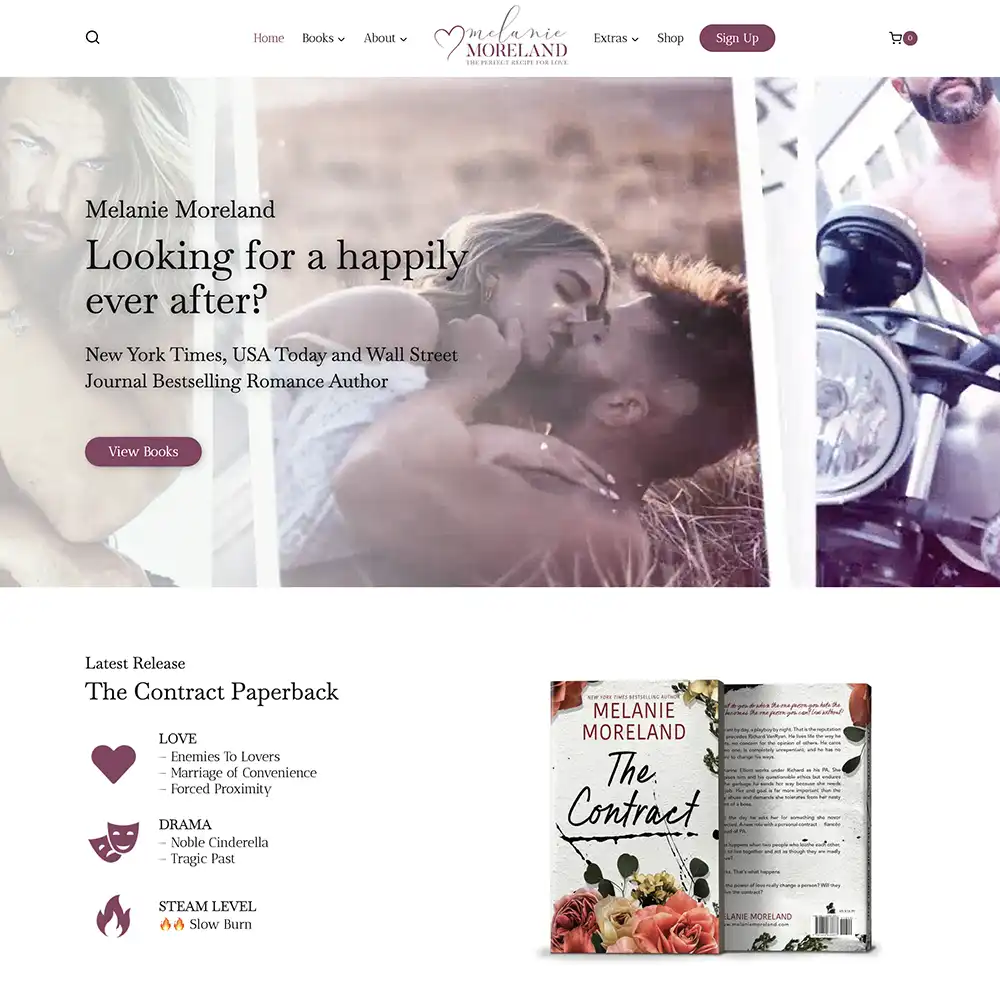
If you’re looking for a unique way to display your reading list besides a long list, you can go by trope, as we did for Melanie Moreland’s Reading Roadmap:

2. Information about yourself
It’s human nature to want to connect with the person behind the art, so indulge your readers as best you can.
In the case of non-fiction writers, sharing more about yourself isn’t just indulging your readers; it’s establishing yourself in the space and showing why you’re worth listening to.
So, here are some tips for your about page:
- Write your bio in third person for that professional touch (it’s also easier since you’re not allowed to write “I,” which can be a crutch).
- Write it in your voice and perspective to appeal to your audience and give them an understanding of who you are.
- Upload a headshot (that isn’t a selfie) that suits your genre. Something quirky will work for a lot of fiction genres, while something more suit and tie formal will work for a lot of non-fiction genres.
- Include your accolades, awards, experiences, and whatever you feel comfortable sharing about from your personal life – it’s your choice!
- Throw in an FAQ section or a section that expands on your adventures if it supports your brand.
Sharon G. Flake’s about page, built by yours truly, is a prime example, including all the tips above. Here’s a peek:

3. A place to contact you
While you may prefer getting DM’ed on social media, a contact page and an easy-to-use form are important if you want to be reachable by your audience, booksellers, agents, publishing professionals, reviewers, etc.
This allows you to connect with readers who want to share their love, and opens doors for some career opportunities all in one.
Top Tip #2: Use a Captcha plugin to avoid bots on your site, spamming your contact form.
Here’s an example of a simple and effective contact page we made for J.Z. York:

4. Reader magnet
Every reader who steps a metaphorical foot onto your website is a potential customer – a potential fan. You need to make sure you capture the traffic going to your site and nurture them, and get them to fan status.
The best way to do it is with a reader magnet that will help you build your mailing list. All you have to do is offer them something valuable in exchange for their email.
Examples could be a free book, novella, excerpt from your first book, fun journey updates, and behind-the-scenes peeks. If they’re interested in you and your work, this will be enough to entice them to join your list.
Keep them engaged with quality content sprinkled with promoting your book to build trust and familiarity, which will make them more likely to become an avid reader.
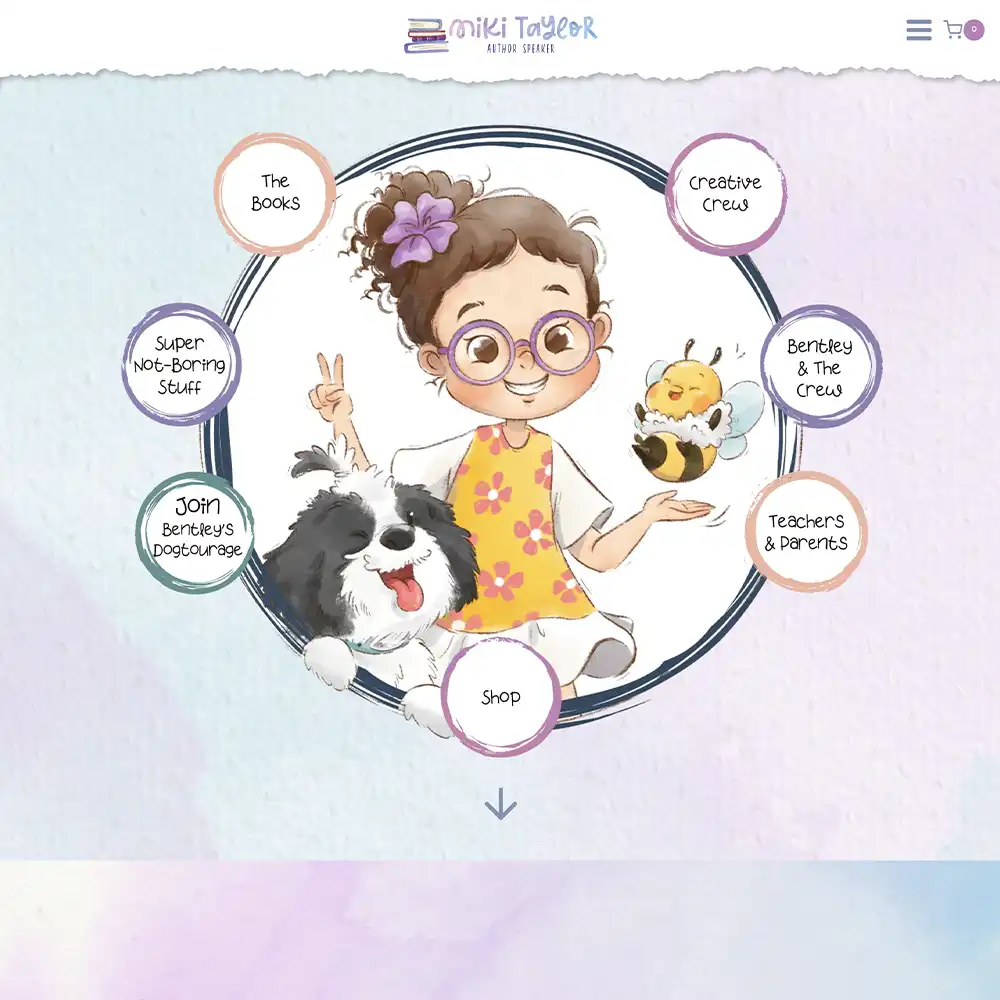
We built the most adorable sign-up page for Miki Taylor’s reader magnet, and it’s a great example of how to pique your audience’s attention:

5. Extras
To fill out your website and enrich the experience for website visitors, you can include some extra pages that’ll extend their time on your site (making them more likely to join your newsletter or buy a book!)
It’ll also make them want to return to your site to check for more content in this section in the future.
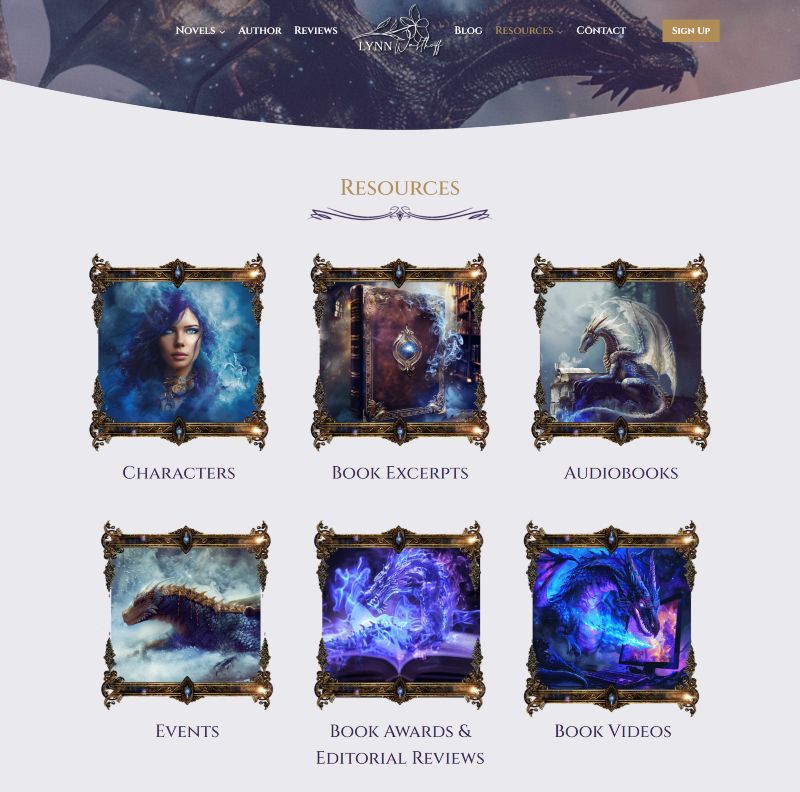
Here are some extra pages you could add: a blog, reader reviews, event calendar, reading order, cool maps, glossaries, services, work sheets (if you’re a non-fiction author), etc.
The author website we built for Lynn Westoff has plenty of extras:
What Should An Author Website Look Like?
Now that you know what goes into a good author website, you’ll need to understand the basics of how it should all look together.
There are 4 elements when considering what an author website should look like:
- Design and style
- Types of content
- Reader experience
- Navigation
Within these elements, you need to keep in mind your brand, audience, and genre to ensure you don’t miss a beat. An aesthetically stunning website will do little for you if it doesn’t:
- Suit the brand you’re trying to build for yourself.
- Resonate with the right audience.
- Set the right atmosphere for your genre(s).
We’re going to walk you through each of these in the 4 elements below:
Design and style
A lot goes into building an author website, but most authors are not software developers, so we thought we’d start off with something more visual. The design and style.
Designing an author website won’t be as easy as describing a fairy forest in your book, so we’d just like to preface that there is no shame in asking for help from a professional.
They have instincts and knowledge that would make the process go quicker, while you get to work on your book and marketing (we build beautiful websites for authors; give us a holler: inquiry form).
Now that’s out of the way, this is the advice we’d give to beginners trying to figure out the design and style of their author website:
First impression
People judge books by their covers, and websites by their intros.
Once the reader lands on the home page, they’ll have 5 seconds to decide if they belong there or not.
Top Tip #3: Make sure the first 5 seconds aren’t spent waiting on a blank screen because the site takes forever to load. Page speed is unbelievably vital to getting traffic to your website. No use having a pretty website if no one sticks around long enough to see it.
The first banner they see should instantly gratify their choice to click on your site and encourage them to explore.
Your brand and atmosphere should be forefront. What that means is you’ll need to consider what you want readers to think of when they think of you and your books.
For example, plot twisty dark fantasy writer with spunk, or sassy contemporary romance writer with a finger on the pulse of modern couple problems. This idea should inform your design and style choices.
And those design and style choices will feed into the next part: intriguing your readers. Do this by using imagery and copy that talks directly to the readers’ needs. For example:
- Non-fiction: Speaking directly to the problems they have and how you’ll solve them.
- Fiction: The type of escapism you depict in your stories and how you can fulfill readers’ fantasies through your stories and style of writing.
Top Tip #4: Use your intro to add a call-to-action that leads to either your popular series, debut book, services page, or newsletter sign-up. Readers need to know where you want them to go!
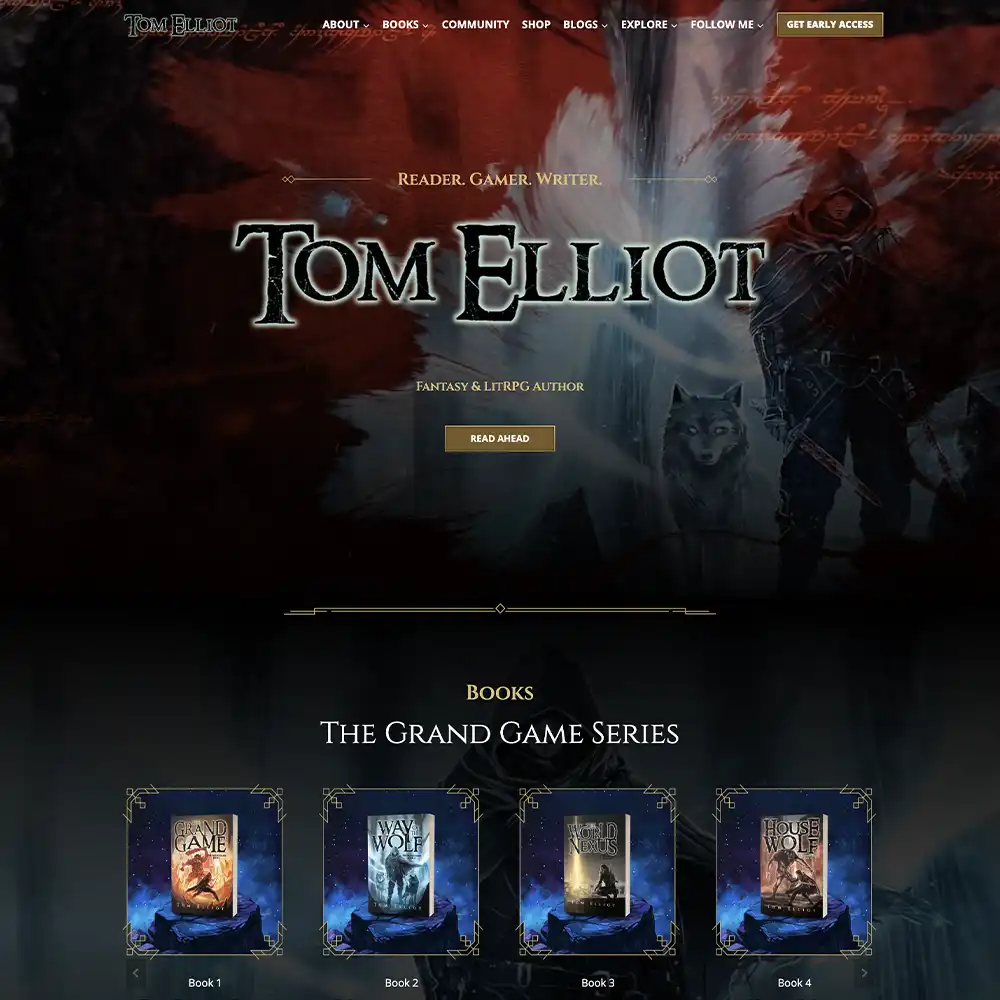
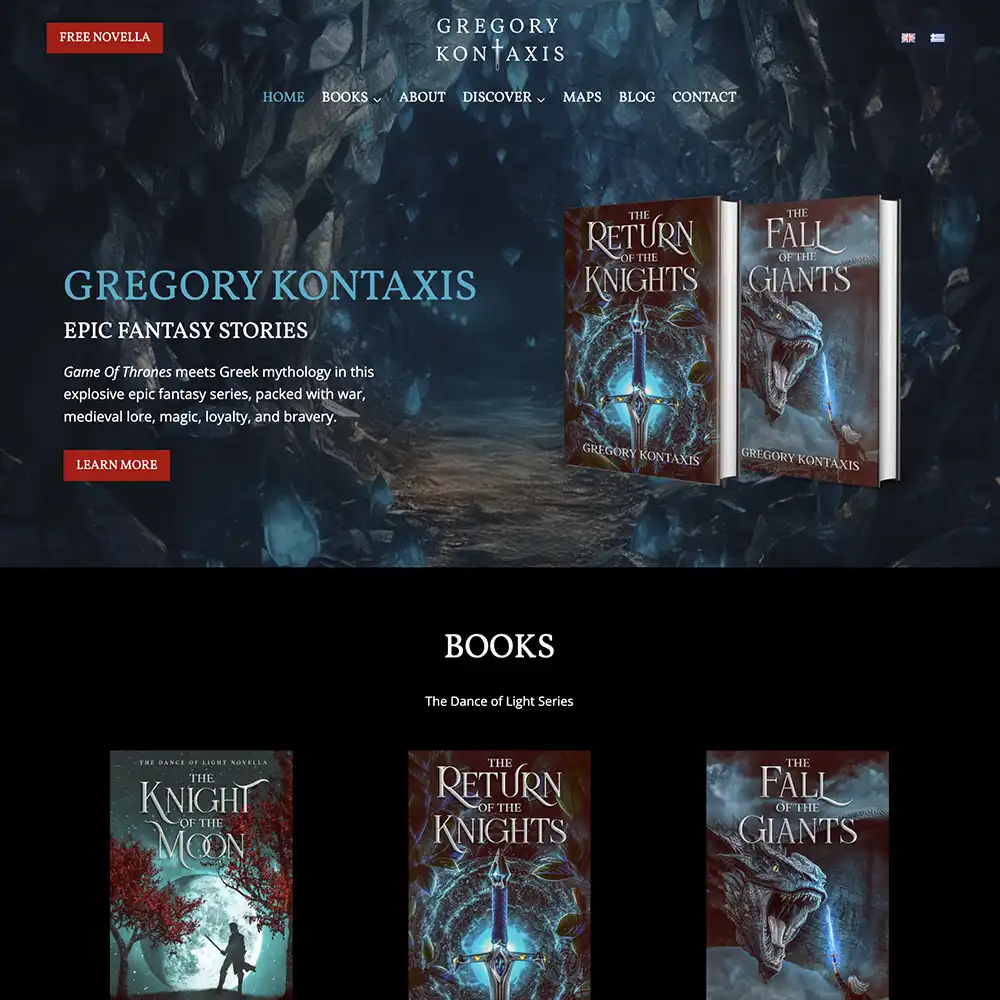
This intro we designed for Gregory Kontaxis’ fantasy website oozes with atmosphere:

Colors & contrast
If you want your author website to pop and highlight the most important parts, you need to make use of a smart color scheme and contrast.
The color scheme should match your books and brand. Spunky writer? Bright pops of colors (without being cliché, of course). Twisty, dark fiction? Grim, gritty colors.
Contrast requires you to balance this color palette, choosing the contrast of each color to add a level of professionalism, ensuring the site doesn’t look muddied with different hues that make it hard to see the content.
Top Tip #5: Use simple colors on the backdrop of your books to help your book covers stand out more.
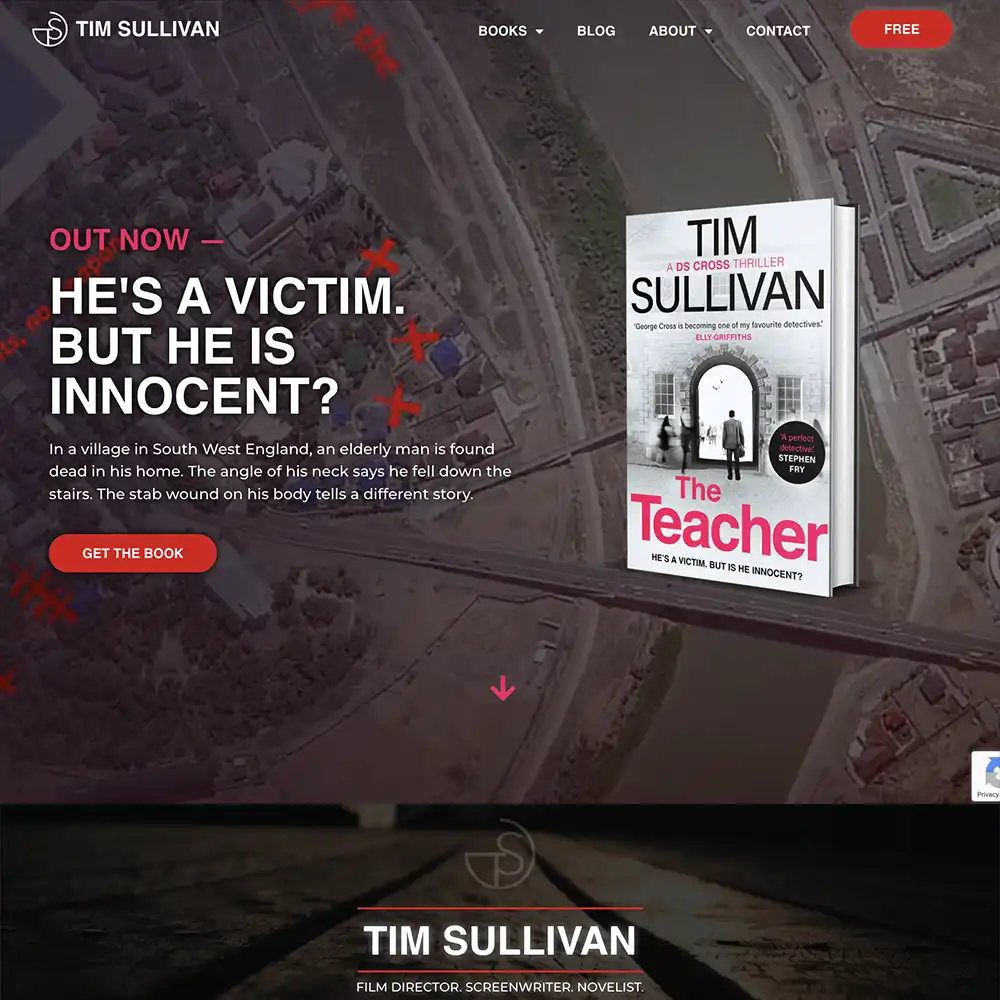
We used color and contrast expertly on Tim Sullivan’s Thriller website. Check it out:

Space
Another way to make your author website look professional is to use space wisely. Between banners, you must add space to show the division of sections.
Even within those sections, you need proper spacing between images and content.
Remember: content needs space to breathe, ensuring the reader doesn’t feel overwhelmed by design elements and copy.
Less is more
You may have all these ideas for colors and images that’ll represent your books and brand immaculately. But trying to stuff all of it onto your website will slow it down and make it hard to understand from a reader’s perspective.
Go for the ‘less is more’ tactic to make your ideas stand out and attract your readers.
Consistency
It’s easy to get caught up in new ideas that come along or forget the style you initially went for.
But if you want a seamless experience for your target audience, your author website, from the home page to the about page, needs to be consistent.
That doesn’t mean every page must have the same layout and images. No, it means that each page needs to look like siblings – not exactly alike like twins, but very much related.
They must have the same fonts, color palette, and style – while varying it to suit that specific page.
For example, your contact page will have a form, so there’s no need for extravagant designs around it when the contact form is the focus. You can, however, put extravagant designs on your map pages to immerse the reader in your world.
Content
The type of content you use, such as blogs, bios, activities, and videos, should be consistent with your brand and genre.
For example, if you’re a life coach, your blogs and videos need to speak to your experience and advice around the topic.
We’d also advise you to think carefully about your typography, because you can get creative and match it to your book and genre.
For example, cursive text for headings for a romance author website. But the normal text should be simpler and easier to read.
Content is a design decision that sets up the atmosphere just as much as imagery. Just as it sets up tension and conflict in your books or slows down the plot for a breather, the way you write copy will set up the tone for your author website.
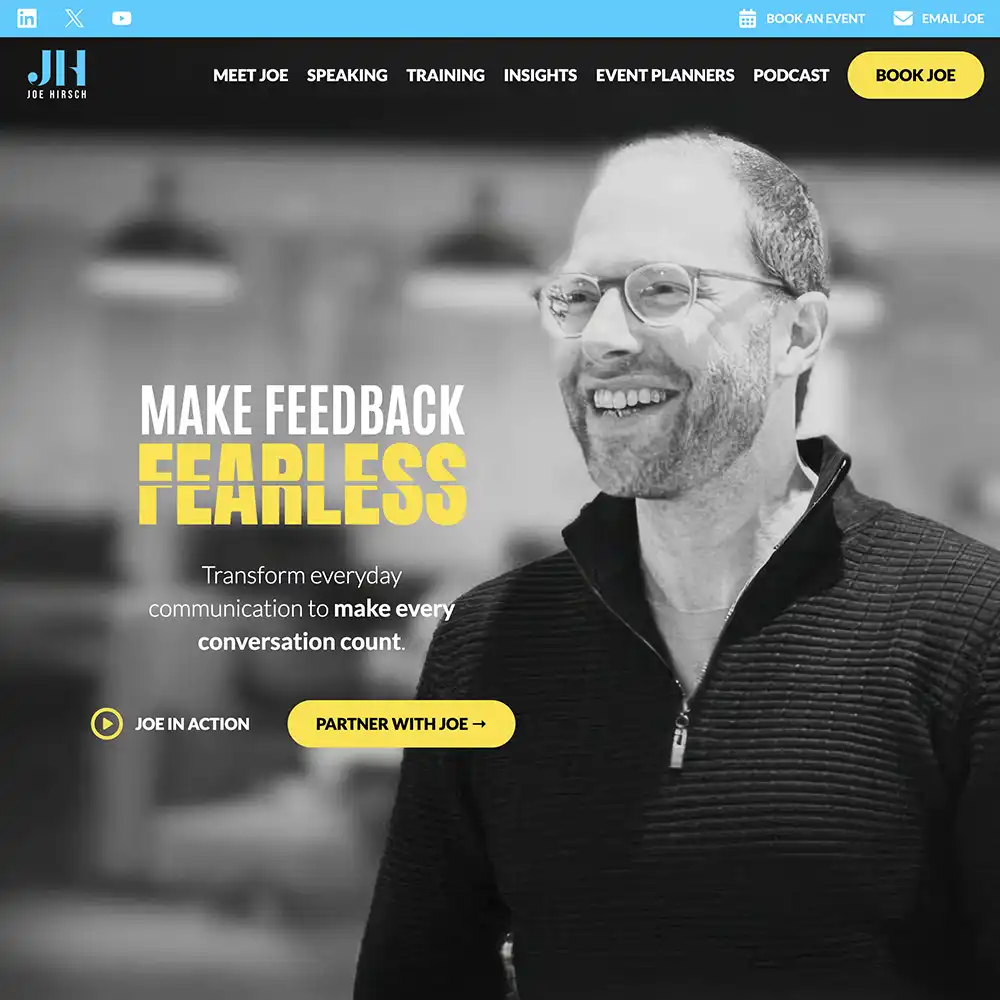
See how we used typography and related content to build a consistent non-fiction website for Joe Hirsch:

Reader experience
At every turn, the interests and experience of your reader should be taken into account. Think about what they want to see on your website.
For non-fiction, it could be info on your next events, and videos showing you in action. For fiction, they’d want to see character descriptions, updates about your writing journey, fun recipes from your world, maps, glossaries, reading order lists, etc.
Make sure to include content that will engage the reader and keep them on your site, and tempt them to come back for more.
Top Tip #6: The reader experience also applies to their experience with tapping icons, links, browsing on mobile, etc., so ensure your website works well and is optimized.
K.C. Ale understands her readers and provides them with content they love: deleted scenes! Check out the unpublished content page we built:

Navigation
Navigation of your site needs to be easy and seamless:
- Your menu should have all the pages of your website, with dropdowns where necessary.
- Your site should have only the necessary pages with some extras for the reader experience.
- Each page should be easy to find.
- Your home page needs to touch on the important sections, giving the reader a taste of them and enticing them to click to find out more.
Need some inspiration for how to go about navigation on your author website? Check out our portfolio.
Ready To Design Your Author Website?
You should now have a better idea of what your author website should look like, but we know there’s still lots of work left to do.
Unfortunately, no matter how good a guide you find, building a website will be no easy feat. Especially on your own.
If you want to skip the fuss and continue writing your book while a professional handles the techy stuff, you’re in the right place!
We’ve built 100s of author websites for all types of authors, from established bestselling authors to debut authors stepping into the industry for the first time. We know what it takes to make a website that pops and makes waves online.
Simply inquire here to get in touch, and we can see how to make your author dreams a reality!