Once a reader finishes your book, the journey shouldn’t stop there.
Because readers don’t just want the next book.
They want to know more about the world. More about the characters. More reasons to obsess over the details they just discovered.
Your author website can deliver exactly that.
Besides being your digital hub with your books, bio, and contact details, your website can become a destination for your biggest fans.
A place to discover exclusive content, interact with your world, and find something new every time they visit.
Note: All the examples here are from author websites my team has built (except for one!). We’ve built hundreds of author websites across multiple genres, for bestselling authors and debut authors. So, I thought it best to show we can talk the talk and walk the walk with our own designs being fan destinations.
Why Your Website Is Your Secret Weapon
You can capture readers’ attention through viral books or memes on social media, but what happens when the trends die out?
The truth of the situation, and seasoned authors will know this best, is that subgenre trends come and go, and it isn’t safe to leave your career in the hands of a fickle algorithm and industry.
The good news is, your website doesn’t go out of style. It’s not based on an algorithm.
If you provide enough value on your website and readers are interested, they’ll keep coming back.
Why leave it up to a social media feed to turn a reader into a fan when you can do it yourself?
A website gives your books a longer life, keeping them as relevant and easily discoverable as you choose. You can use reading orders, lore extras, and more to lead readers to your best work so it always has a steady stream of interest.
An author website becomes your secret weapon when you use it to own your relationship with readers and give them reasons to obsess over your books and become fans.
How to Turn Your Author Website Into a Fan Destination
Each resource will serve a different purpose, and I’ve categorized it below based on what I’ve seen do well with readers.
You don’t have to add a fan resource from each category to your author website, or even stick to one per category. Mix and match them according to what fits your subgenre and brand best.
1. World-Building Extras
Fiction websites benefit the most from this, especially speculative fiction like fantasy and sci-fi.
The idea behind world-building fan resources is to give readers a rabbit hole to go down for their favorite book or series.
Readers who loved the world you created would obviously love to be in it for longer. So put that on a silver platter with these extras:
Maps
Raise your hand if you’ve opened a fantasy book and immediately got excited when you saw that the author included a map.
Yup, pretty much everyone loves that addition in a book. So, why not on your website?
You can make it interactive, allowing readers to hover over key spots while reading your book, or just fawn over the beautiful world you’ve built and imagine themselves in it.
Here’s an example from an epic fantasy author website we built for The Ultideic Prophecies
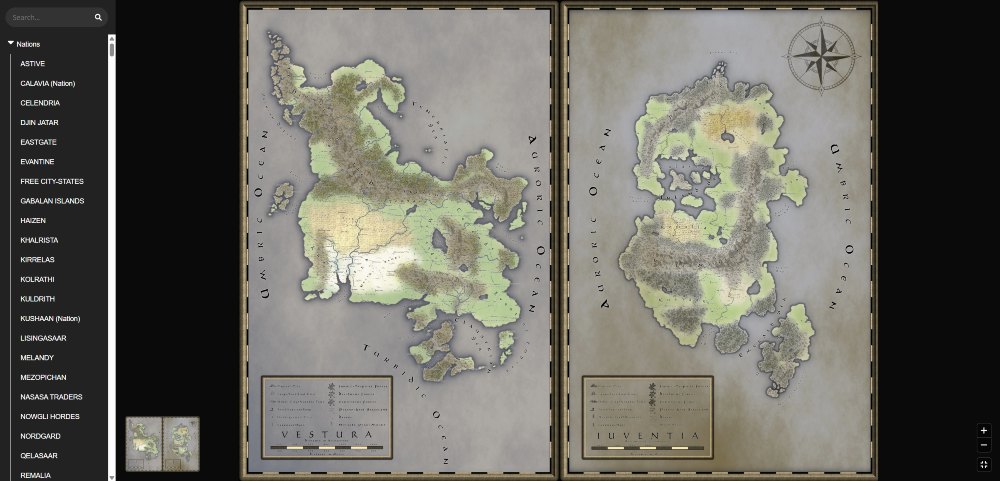
The map is large, as you can see, so we added the nations on the left for readers to quickly find what they needed in this massive world.
But if you want to go for something simpler, readers will still love it. Just make it easy to navigate and interpret.
Character descriptions
Adding descriptions of characters to your website can help immerse readers further into your world. This works best for fantasy, sci-fi, and romance.
You can include character profile artwork to help readers visualize your characters.
This works well if your cast is complicated and readers need a quick reminder of who’s who as they read your series.
Even if your cast of characters is small, including descriptions can be a cool way of introducing them to new readers or reminding fans of their quirks when reading your new release.
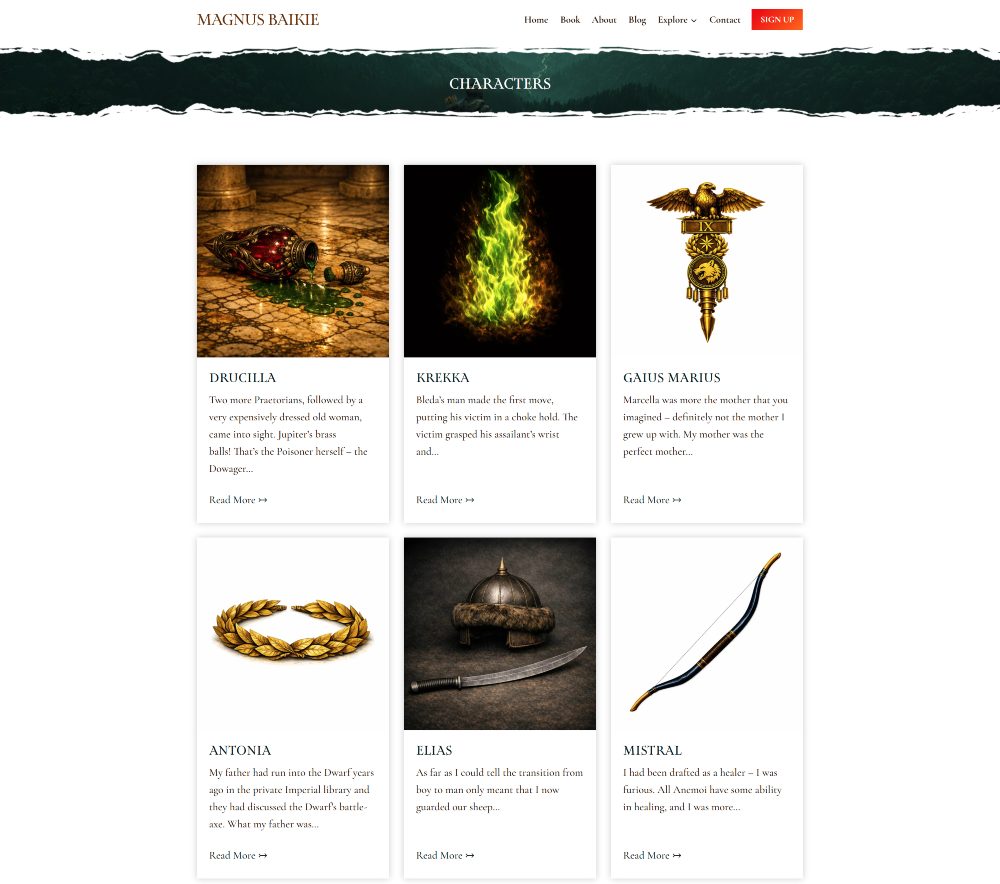
I like this example from Magnus Baikie’s site, where instead he used symbols to resemble characters, allowing readers to picture them as they wish:
Glossaries
This is for epic fantasy and space opera authors with so much terminology they need a whole dictionary.
Glossaries are a treat when you open up a book and realize you don’t have to stress about remembering what a Bene Gesserit is (Dune fans will understand).
Displaying this on your author website allows readers to open it while reading for ease of use, and to pull up while they’re daydreaming about your book and forget the word they’ve been looking for.
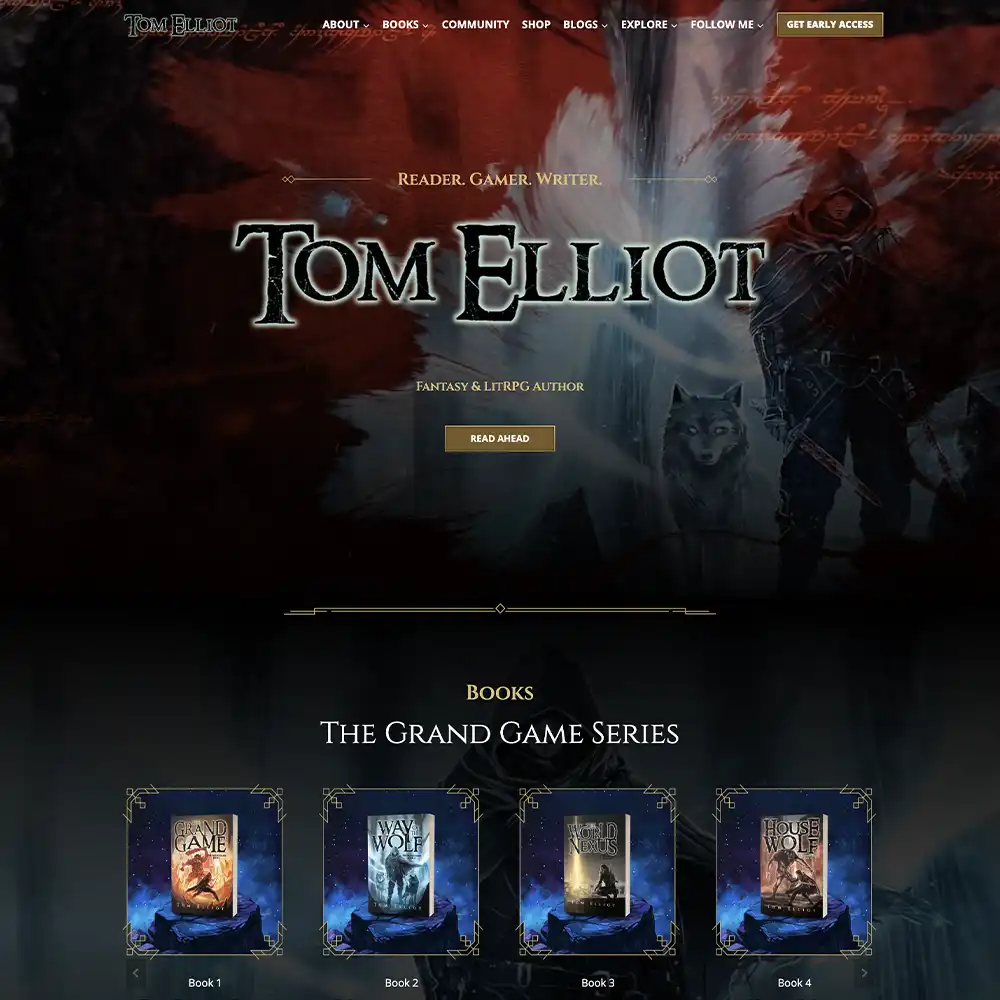
On a massive LitRPG website we built for Tom Elliot, we included his expansive glossary:
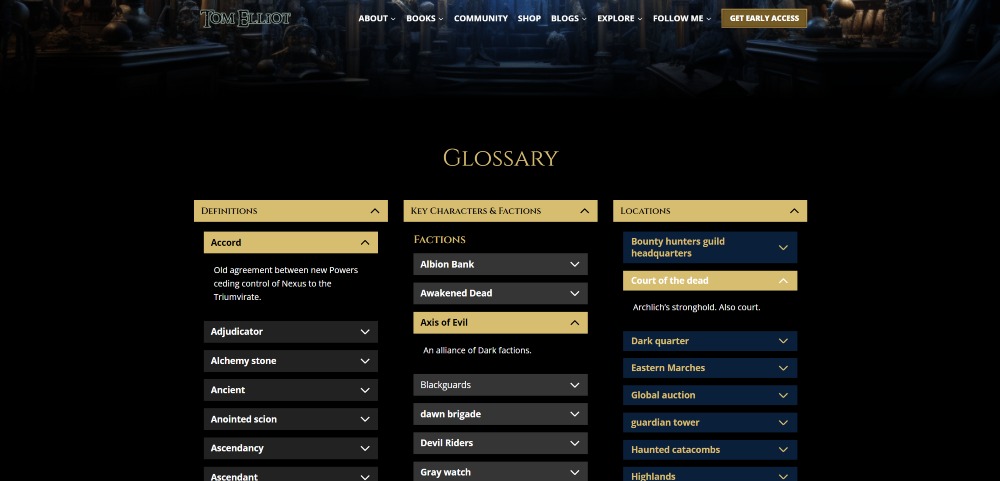
I think this is a great example for those who have a grand world with complex terminology. And for those who want something less complicated, a normal landing page listing out your glossary from A-Z will do just fine too.
Lore pages
If you’ve spent hours creating your world, only to feel like most of the beautiful world-building lives in the background, boy, have I got news for you.
Your world-building pages have a home on a lore page. Really, any other juicy bits about your world and books have a place here.
Whether it’s to accompany the reader as they devour your book, or to provide even more context to the world, readers want every crumb.
We built a sci-fi military site for Daniel Gibbs, and I’d classify that as a fan’s haven. He has universe maps, timelines for his series, and this awesome lore-accurate section with his starships:
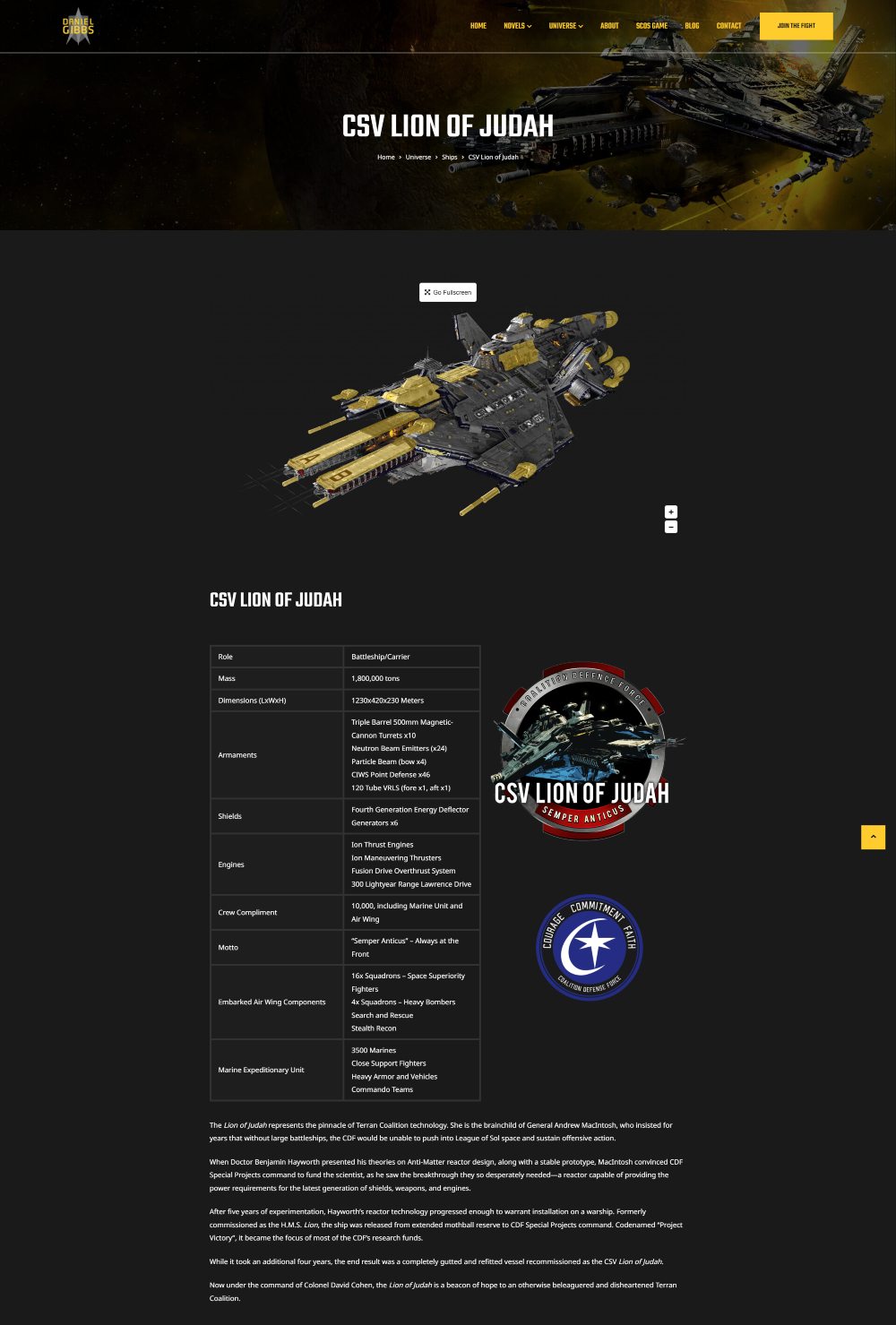
The reason I’m using this as an example is to show you the lengths you can go to as an author to really dive into your world and give readers every drop from your pool of lore. And Daniel Gibbs delivers that and then some.
Playlists
Just like with movies and TV shows, a soundtrack can elevate a book and immerse the reader in scenes.
If you had a playlist that you put on every time you wrote your book, readers would want in on that action.
Or if you want to curate a playlist that is the ideal soundtrack to every chapter, readers will eat that up too.
This example comes from a beautiful website for romance author Julieanne Carpenter:
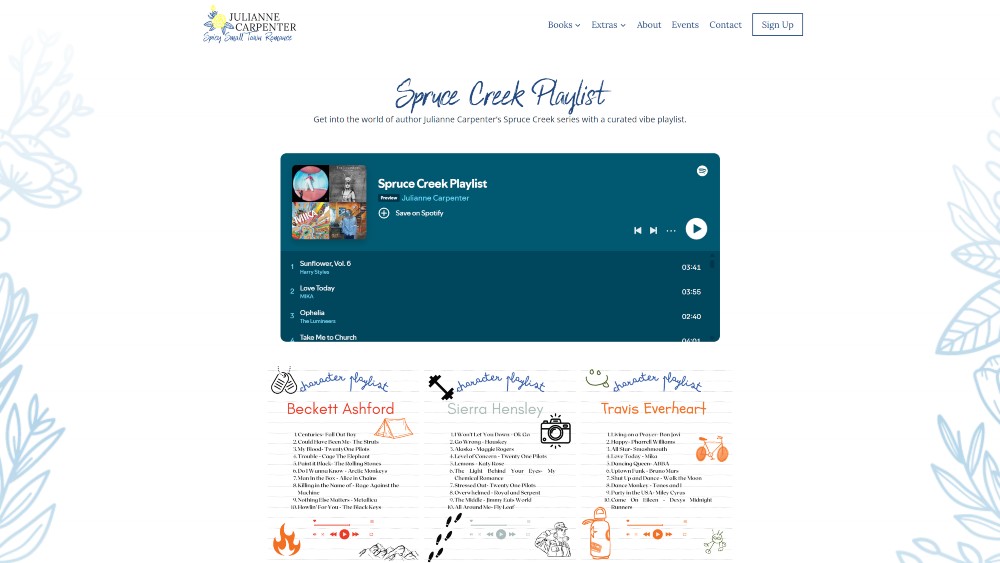
She has the playlist embedded for her popular series, and includes cute illustrative playlists for each character below it, giving readers a reason to return and find their favorite character’s playlist.
2. Exclusive Extras
Nothing excites a reader more than realizing the book they finished has even more content made by the author.
These fan resources help the reader never truly leave your world.
Blog or News Updates
You can’t always guarantee all your readers will see your updates on social media (thank you for that, dear algorithms).
But your blog page is one place readers can get all their info quickly and easily.
And it doesn’t just need to be updates either. It can be a community-building opportunity to let readers into your writing journey.
T.A. White’s blog is a stellar example of how to use your blog and engage with readers:
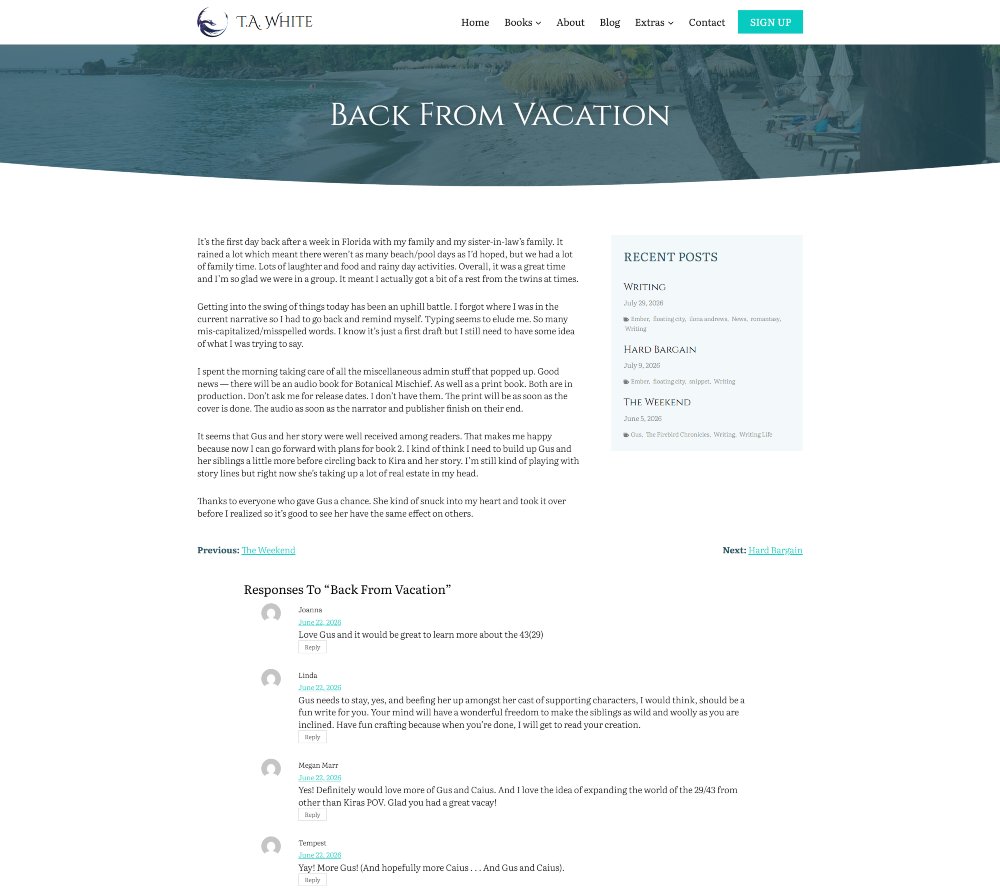
This was just a quick update on what’s going on in her world and what she plans to do with a character in her latest book based on reader reactions. Simple, earnest, and to the point!
As you can see, she’s gotten plenty of responses (I couldn’t show them all; the screenshot would be too long), proving readers will interact with you if you engage with them.
Events
In a similar vein to blogs and keeping readers up to date, we have the Events page.
Whether they’re online or in-person events, die-hard fans will want to know where they can find you next.
Maintaining this page will ensure readers know you’re active and one to check in on.
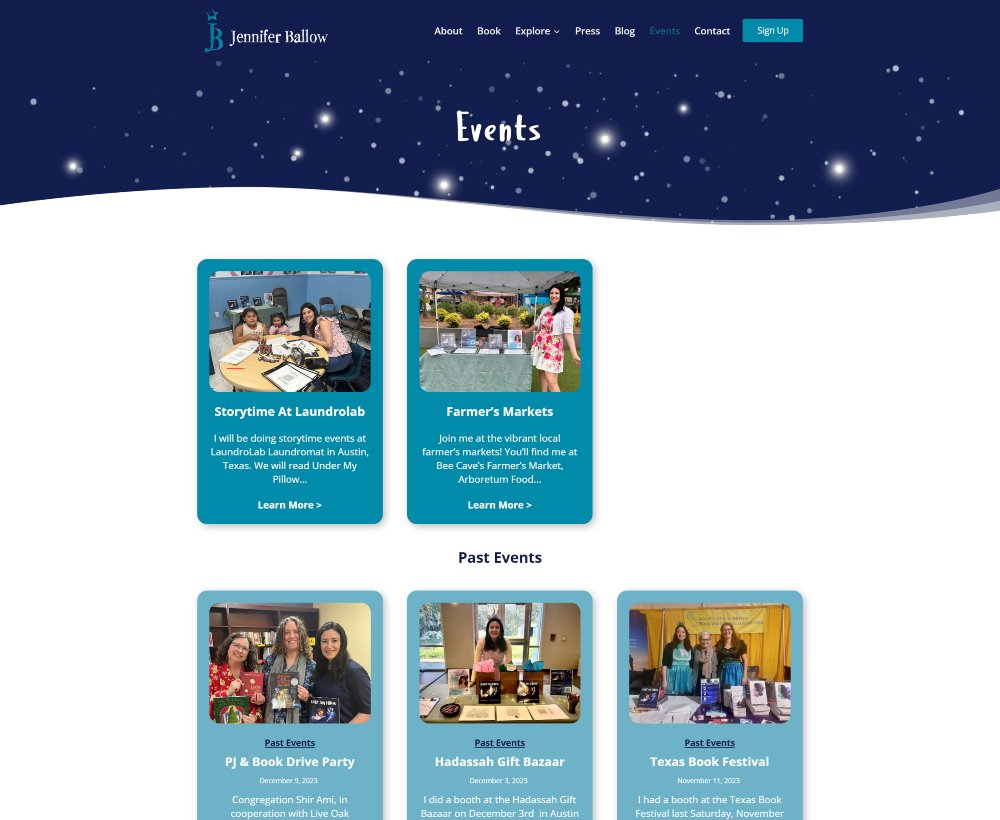
Here’s an example from Jennifer Ballow’s children’s author website:
Deleted chapters
Most authors probably have a document of scenes that were too lengthy or didn’t quite fit the book’s pacing. Nothing may have been wrong with them, but they just didn’t make the cut.
Your website is the perfect place to put them.
If a reader loves your book, they won’t mind reading through an extended scene to get more details, or a conversation between the love interests that couldn’t fit in the chapter.
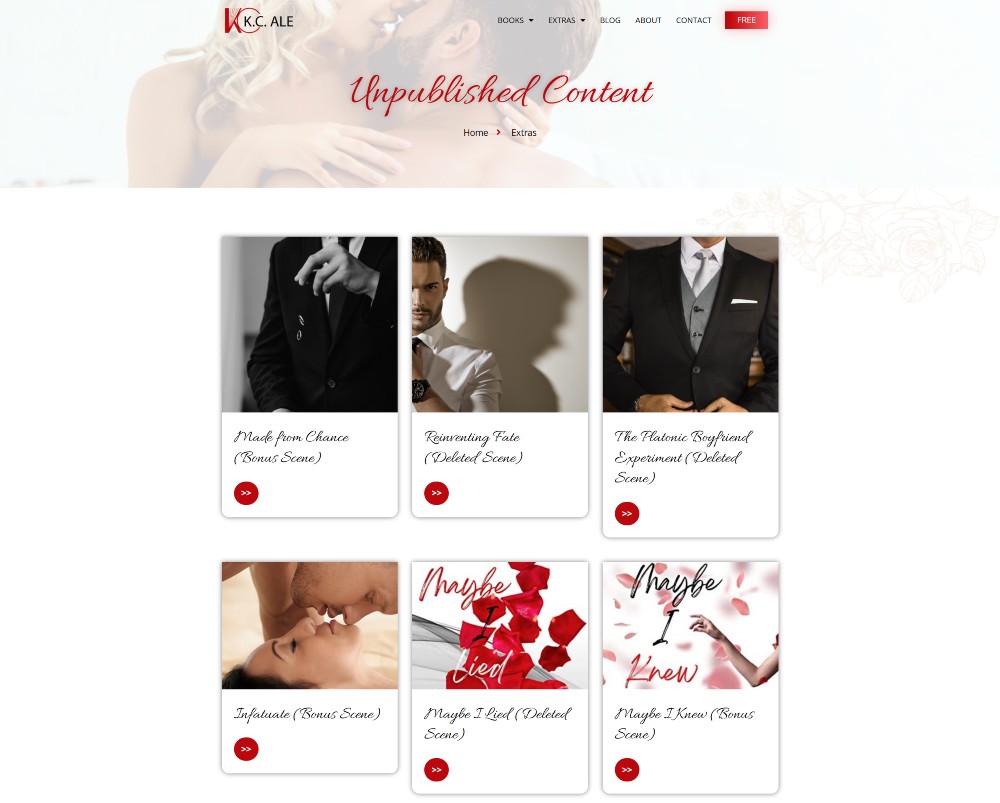
Here’s what that can look like, as seen on K.C. Ale’s website:
Bonus chapters
I put Bonus chapters under a different heading because you can create these long after the publication of your books, unlike traditional deleted scenes.
For example, if you’re having a 5th anniversary for your book, or want to revive some interest in a series, you can release bonus chapters from other character perspectives, or showing an alternate timeline of events.
This could get readers in the mood for your books again and stir up some hype around an older series from your catalogue.
Short stories
In between releases, or to hype up your debut, you can post short stories to give readers a taste of what you can do, or tide them over while they miss your writing.
Short story extras or novellas also work if you want to give a fan favorite side character a bit of love without overdoing it with a full-blown story.
Either way, while a reader is waiting for new books from you, you can keep them happy with some short stories in the style they love so much.
Debra K. Every does this on her Thriller author website:
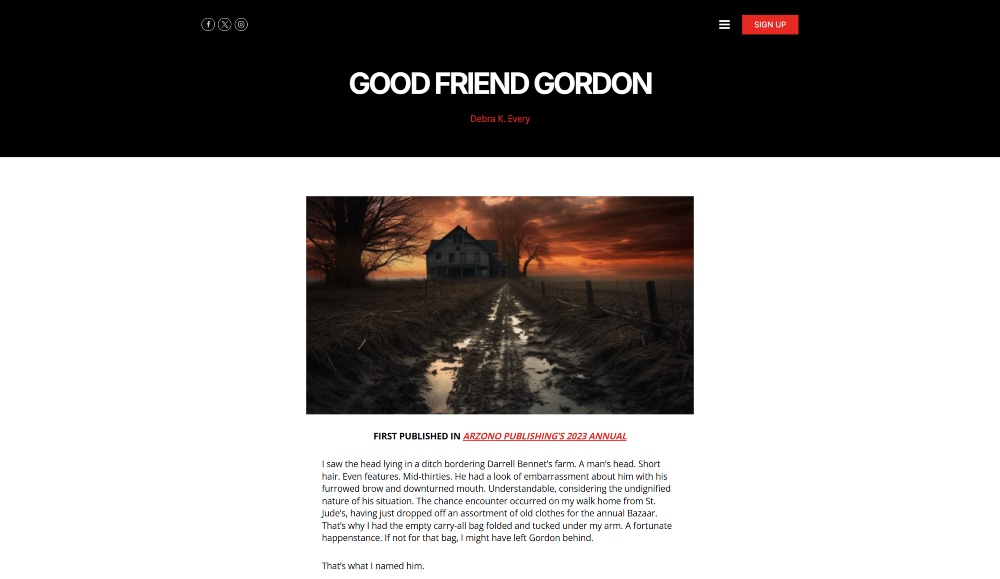
As Debra has done here, add the title to the top of the page, provide any other details about publication, then get straight to the story. Easy!
Behind-the-scenes content
This is not even a reader thing. It’s a human thing. We love having a peek behind the scenes to see how the magic is done.
Satiate the reader’s curiosity and let them see the inspiration for your characters, the backdrop and setting, etc.
You can include pictures of your travel that inspired a location in your book (this works well for non-fiction authors, too!), for example.
Sci-Fi author J.Z. York does this in the form of a Q&A for readers to learn more about her and the books:
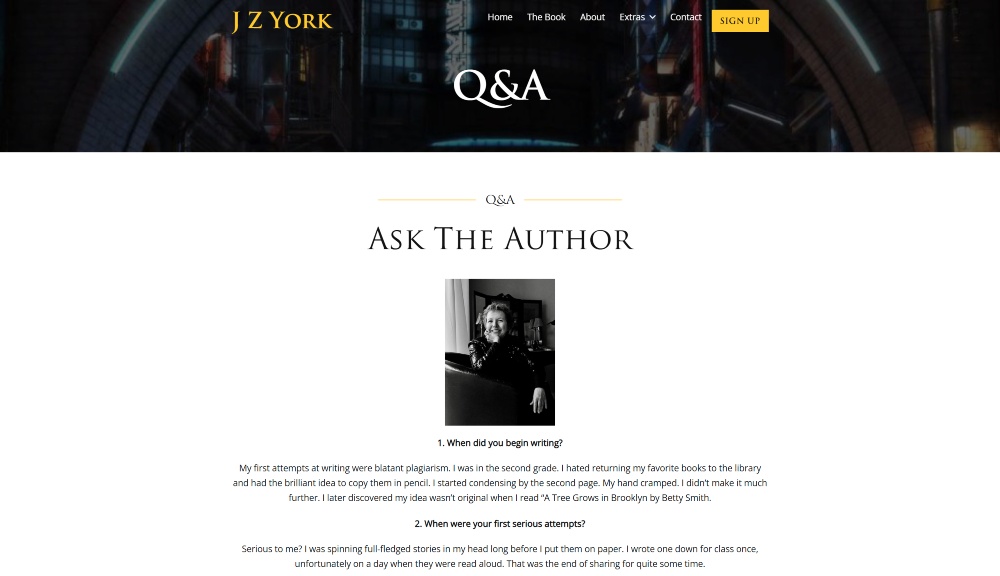
The beauty of the Q&A here is that it takes the reader behind the curtain while warming them up to you, and that’s why BTS works.
3. Interactive Reader Content
Next up, interactive content.
Any content that readers can interact with or use is a winner. It shows you care enough to do something extra to cater to them, and just makes their lives easier as a reader.
Here are some examples of interactive content on your website that fans will love:
Reading orders
This is the most obvious extra you can have, and fans adore it (especially romance readers). Anything that helps readers go through your catalogue will be appreciated (double brownie points for those authors that have alternate reading orders that cater to specific tropes and timelines).
I love this example from Melanie Moreland:
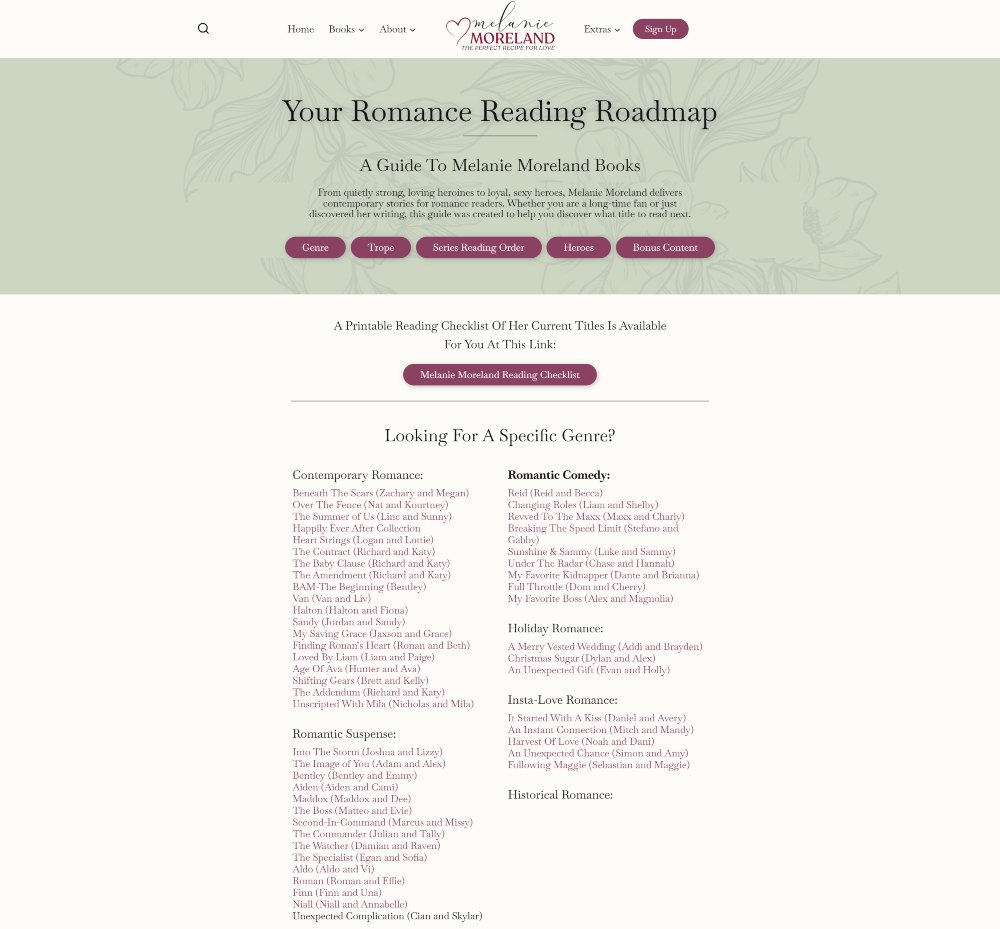
She has so many different categories and ways for readers to approach her books, giving them endless ways to start her catalogue.
Character trees
If you have a complicated cast and universe, showing the connection between characters is the perfect fan resource.
A lovely example of how you can do this comes again from Melanie Moreland’s beautiful romance website:
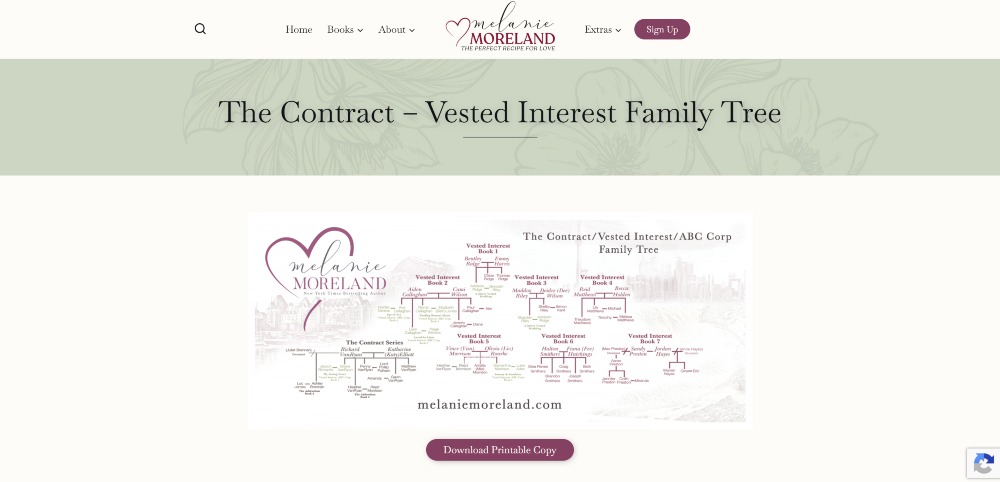
The picture is downloadable, easy to navigate, clearly labelled, and in her branding.
Quizzes
If you want something more custom than a reading order, you can develop a quiz to show readers what books they should try based on how they answer. This is a great way to help new readers dip their toe into your world, and perfect for your fans who may be in a reading slump!
Book clubs
Invite readers into your online book club where you guys all read the same book for a month. This is one way to deepen your connection with readers.
Or provide book club topics for your readers to discuss while reading your book, as Sheldon Collins did on his website:
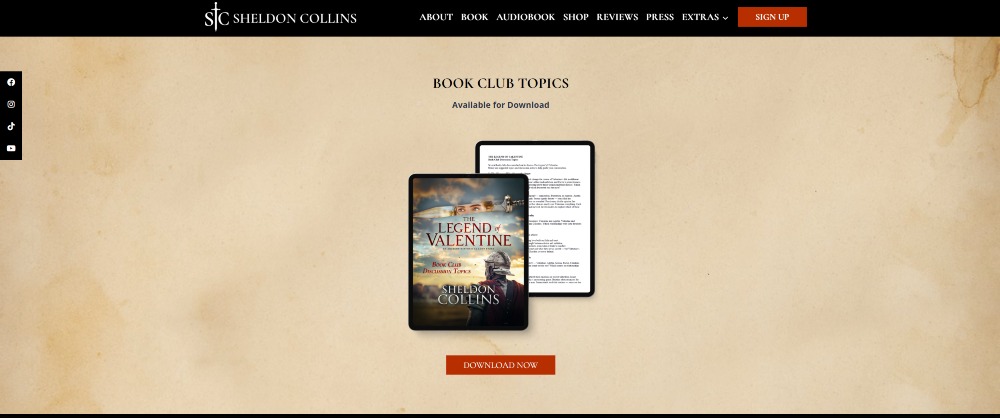
If you don’t have the time for a monthly book club with readers, this is a wonderful substitute that makes your book accessible to book clubs.
“What I’m Working On”
This fan resource is often used by LitRPG authors and speculative fiction authors, but can realistically work for any author, in my opinion.
If you want to show respect for your reader’s enthusiasm over your work, this section is a must. You can place it on the homepage or on a fan resource page with more details.
But the idea is to keep readers in the loop on what you’re writing now and what’s next in the pipeline, so that they feel part of your journey too.
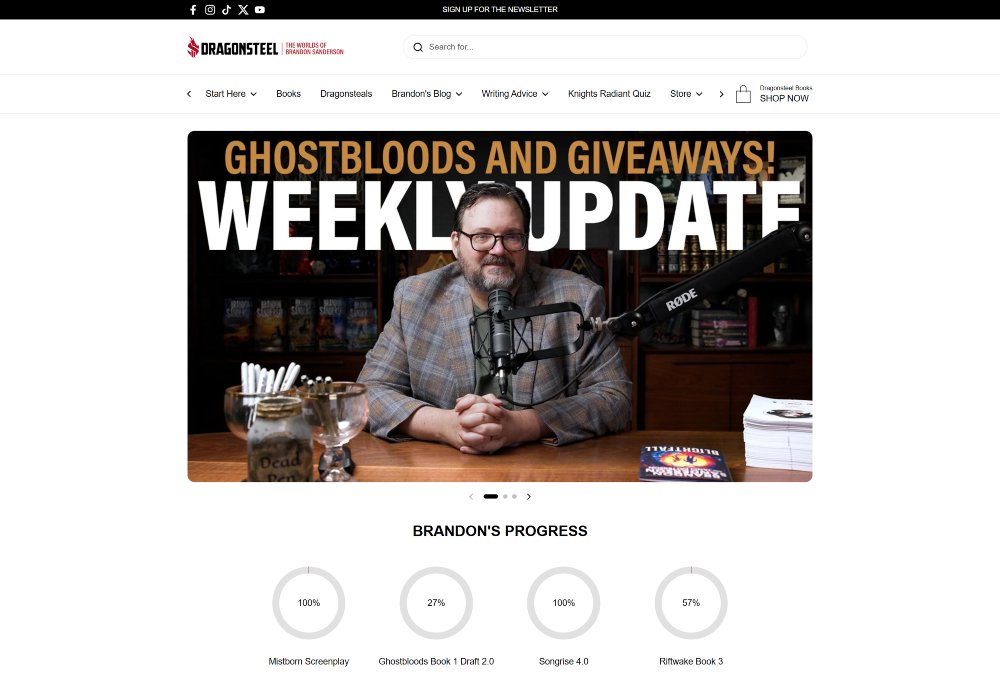
This example comes from an author we didn’t actually work with, but that my whole team thinks highly of: Brandon Sanderson. He has progress bars on his homepage, and it’s a lovely addition to show readers he cares:
4. Hype-worthy Extras
Hype-worthy extras are for the times when you, as an author, are in your moment or want to create it. Whether you’re trying to catapult your trending books to further stardom or reinvigorate your fanbase, you have some tools to turn your website into more than a fan destination, but a hotspot.
Reveals
This could be any sort of unveiling, from book covers, tropes, clues to which characters will be in your next release, etc.
These reveals can go off daily or weekly, and you can remind readers on social media about the reveals to generate hype.
Giveaways & limited-time offers
If you ever want to host giveaways, prizes, or any limited-time offers, your website is the ultimate vessel.
Not only does it give readers a reason to keep checking on your website, but it builds a sort of expectation with every release that fans know to keep an eye out for you.
Build a Website Your Readers Want to Come Back To
Readers come to your site to find your books and series.
With fan resources, your website becomes something much more than a one-stop shop.
Giving readers a reason to return gives you a better chance of turning casual readers into dedicated fans.
You become memorable.
I hope this gives you some ideas for fan resources on your own website. And if the idea of building a stock standard website overwhelmed you, I can only imagine how much more overwhelming it is now that you want to add extra content.
That’s where my team can help. While you toil away at your book and get your extras ready, we can do the heavy lifting and technical work. Check out our page here to see how we approach these projects, or book a call and let’s talk through your website goals.