
Facebook ads can be the most frustrating part of book marketing. One week an ad is selling books, the next it’s burning through your budget, and you have no idea why.
Some weeks it feels like playing a game with Jigsaw from Saw, and the game is Meta’s algorithm.
I’ve managed Facebook ads for authors for 4 years, and I’ve even had author clients hit #1 in the paid Kindle Store. I’ve done the courses and watched the YouTube and TikTok tips, and they helped. But most of what fixes a struggling campaign, I learnt in the Meta dashboard, running ads for our authors every day.
When Facebook ads don’t sell books, it’s usually one of these reasons:
- You’re copying another advertiser’s setup
- You turn ads off too early
- The creative isn’t captivating readers
- Your ad neglects the reader POV
- You’re fighting the algorithm
Below, I’ll go through each one and what to do about it. This applies to Facebook and Instagram ads, since Meta runs both.
And if you’d rather spend your time writing and have someone else handle your ads, you can check us out here or book a call with me, Matt.
Note: Before You Begin With Meta Ads for Book Sales
If you want to know if you’re a good candidate for Facebook ads, here are two quick checks:
- Your book has at least a hundred positive reviews (Your book will sell better when there’s plenty of social proof to back it).
- You have a catalogue or a long series to recoup the spend on the ads (Facebook ads for authors work best when readers have more books to discover through the one ad).
5 Reasons Why Your Facebook Ads Don’t Sell Books
My team and I really love what we do – especially since we get to help authors sell their books.
Creatives are fun to make, and copy is fun to write. That’s all because the subject matter is fantasy, romance, adventure, and more.
Which means what I’ve learnt matters to advertising books more than anything else.
So, if you’re looking for advice that you won’t hear elsewhere and that will help you as an author, then you’re in the right place.
Here are the 5 reasons why your Facebook ads don’t sell books.
1. Stop copying someone else’s setup
Anyone feel like advice comes in definites?
Especially in recent years, when some people make bold statements and claims to get attention and gain an audience.
“Do this if you want to increase sales.”
“If you’re doing this, you’re missing out on this audience.”
Successful Facebook ads can be the difference between the right settings and the wrong ones, sure.
But in reality, it isn’t that simple.
Bottom line: what works for others won’t necessarily work for you.
Doing this won’t guarantee anything.
Every author and book has a different audience and a different fantasy to fulfil.
Two romance authors may have completely different subgenres and styles of writing, which affect what type of reader they attract.
Not to mention the series’ read-through rate.
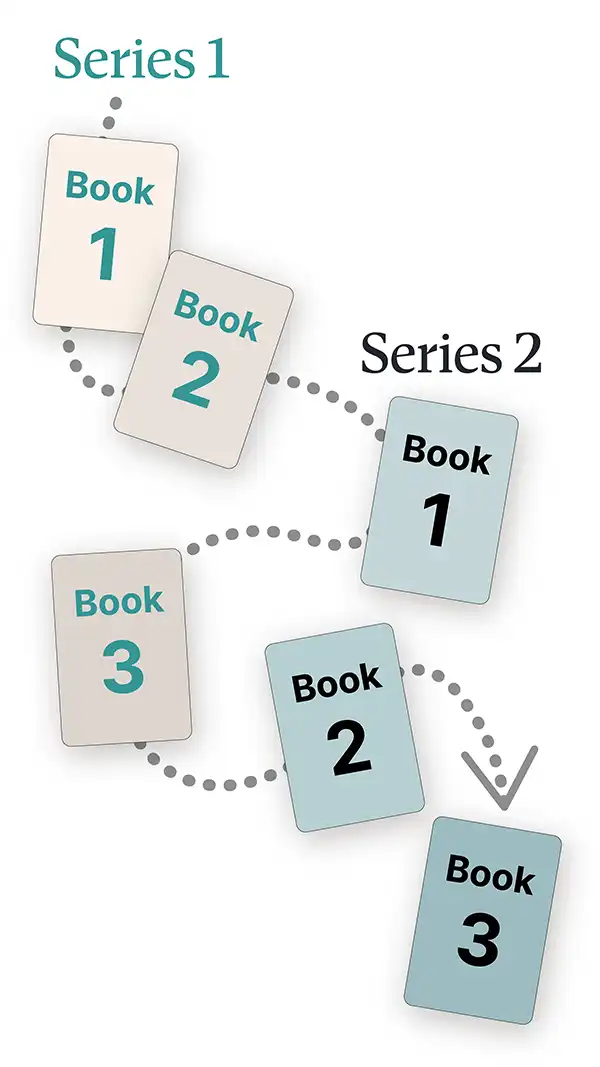
For example, an addictive series with barely any drop-off in readers between later books in the series would have an easier time than a series with lower read-through.
I’m not saying don’t try what works for others; I’m just saying to take advice with a grain of salt.
It’s frustrating trying to put a square peg in a round hole. So, don’t get caught up in the comparison-copy game.
I suggest looking at your genre and book realistically and changing the setup to suit those aspects – and remember to test small changes at a time.
2. You’re trigger-happy with ad tests
When you first get into Facebook ads for your books, you may be tempted to spend hours and hours every week studying the data and making decisions quickly to get those sales.
It’s addictive, I get it.
It feels like so much rests on the budget you’re putting towards your ads; you don’t want to waste any of it.
So, once an ad looks like it’ll stink up the place, you switch it off.
But I’ve found that waiting the full seven days for data, and even longer, can be worth it.
Especially if you’ve got a performer on your hands that seems to be dying.
Over time I’ve found that, just like humans, an ad can have a bad week.
Whether your readers were busy that week and didn’t have the time to check out your book or whether Amazon was doing a less-than-honest job tracking the sales that week, it’s hard to say.
I’ve personally watched ads with low performance in their first week pick up after the second week and become a winner.
I’ve also watched a winner have a bad week and go back to normal the next.
Being fast on the trigger to switch off ads or even change testing methods can result in wasted spend on something new because of a blip in the data.
Part of that is how Meta works. Every new ad needs time for the algorithm to learn who to show it to, and what it learns helps the rest of your campaign too. Switch ads off too quickly and you throw that learning away and start over.
Patience isn’t a sign you’re doing nothing. It’s how you give Meta enough data to find your readers.
I recommend waiting at least 7 days before making a change to your ad tests (and in cases of lower budget, up to 14 days).
3. Your creative doesn’t send the right signals
Maybe you’ve heard this before. Or even a hundred times before.
That doesn’t mean it isn’t worth reiterating.
While deep in the Meta dashboard trenches, I even forget sometimes.
Your creative matters a lot.
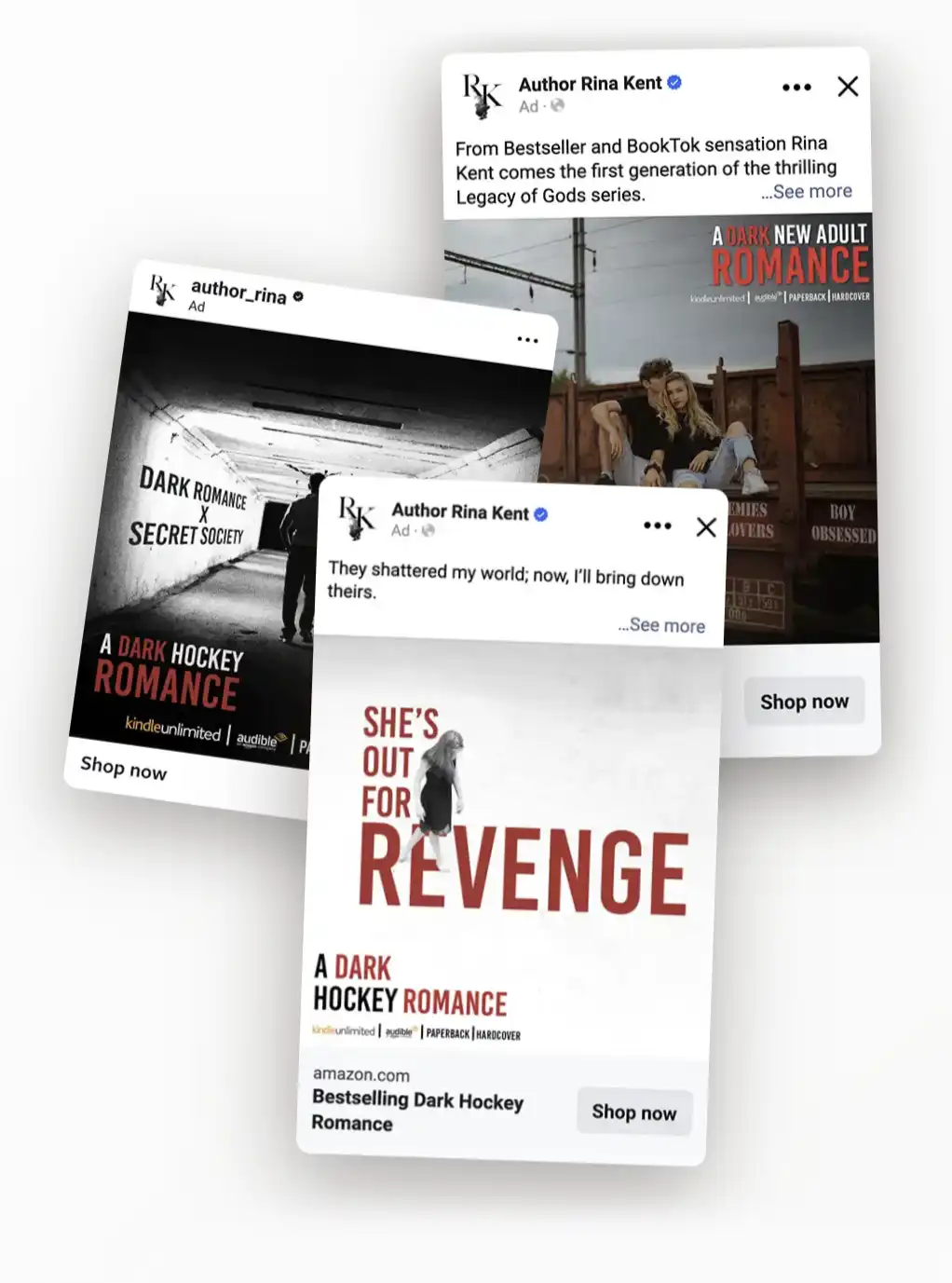
When there are changes to Meta’s algorithm, you may feel obliged to change targeting, placements, copy, and other settings.
This serves as your reminder: the creative is everything.
We’re in an age of media where the visuals are key.
And how you deliver your book’s vibe and themes matters.
Because Meta uses your creative as a signal for who they need to deliver the ads to. They analyse the copy on it and the visuals themselves and start delivering.
So, when things are looking down, it may be time to freshen up the creatives.
Change the character perspectives, the angles, and the subject matter of your creatives. You’ll be surprised by what may end up sticking.
You can try video or static, but I know how time-consuming it can be to make videos just to watch them not work.
So you could try finding a static angle that works and translating that to video before getting to testing.
4. Not looking at your ad from the reader’s POV
This tip works for all your book marketing, really. But especially for ads.
Putting a book cover on creatives isn’t always enough to attract readers.
You know your book inside out, and when you’re looking at creatives and copy, you may only be thinking of it from your own perspective – from someone who already knows about the book.
From an author’s perspective.
When you’re deciding on visuals and primary text, you need to look at it from your target audience’s perspective.
What will your ideal reader think when they see this? Will they just think it looks cool?
Or will it intrigue them and show them what boxes your story ticks for them?
This shouldn’t be too hard if you love your book’s story and know the type of reader that would love it too.
Just ensure everything appeals to that reader.
To be specific, here’s a quick list of what you should achieve:
- Your ad should stop the ideal reader from scrolling by.
- Your ad should be clear on genre and subgenre.
- Your ad should represent the main hook that appeals to readers who will not just read book one, but the entire series.
5. You don’t trust the algorithm
No matter what you do, you’re at the mercy of Meta’s algorithm.
When you’re testing your ads, whether at the beginning of your Facebook ads journey or as an experienced advertiser, you have to wait to see what Meta’s algorithm thinks of your ad and how it serves it to users.
We all have to wait and trust the process.
Like it or not.
It’s part of the deal when you manage ads.
And when the time comes (and it’ll definitely come more often than you’d prefer), you’ll receive news that there’s been another update.
You have to let it do its thing. And be patient.
But in between trusting Meta to do its job, you’re allowed to get your hands dirty.
Adjust what you think may be negatively impacting your results and stick with it. Trust yourself, and trust that the right change will stick when Meta delivers it.
It’s the most frustrating part, because it’s a waiting game.
Remember, you don’t always have to wait; you can assess and make changes to one ad to see what works.
Just be sure to make changes carefully. Too many changes and you won’t know what the right one was.
It’s Time to Sell Books with Facebook Ads
There you have it.
Those were the 5 reasons why your Facebook ads don’t sell books.
While you’re scratching your head and stressing over your ads, I hope these provide some semblance of peace and assurance to keep at it.
And if you’re genuinely tired of managing this on your own and you’d rather spend your time writing your next book, my team can help you.
If you want to keep a steady stream of attention on your bestselling series, revive an old series, or promote a new one, we’ve got your back.
Check out our page here to see how we approach these projects, or book a call and let’s talk through your goals.